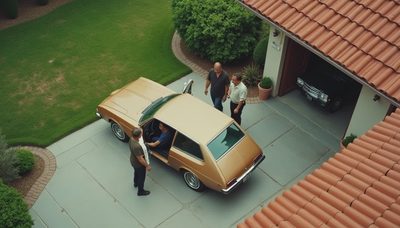
You pull into a dusty gas station in the California desert, the smell of old leather and hot asphalt drifting through the open window. The car is a 1969 Porsche 911—a machine built for curves, not convenience. Except there's one problem: you don't own it yet. You're on a test drive, and the owner is watching you from the shade. To make this car yours, you need financing. And that means classic car loans, a category that behaves nothing like the loan on your daily driver.
Classic car loans are specialized financing products designed for vintage, collector, and enthusiast vehicles. Unlike standard auto loans, which treat cars as depreciating assets, classic car loans often consider the vehicle's potential appreciation. But the catch is that lenders see classics as riskier—higher maintenance costs, more limited use, and a smaller pool of buyers if they have to repossess. So how do you navigate this niche market without overpaying or locking yourself into bad terms?

What Are Classic Car Loans?
Put simply, classic car loans are installment loans secured by the vehicle itself, but they come with specific restrictions. Most lenders define a "classic" as a car over 20 years old, though some require 25. The vehicle must be in good condition, and many lenders limit the loan amount based on an appraisal. Interest rates for classic car loans are often higher than standard auto loans—think 6% to 12% APR, depending on your credit score and the car's value. Loan terms are usually shorter, too, often between 36 and 72 months, but some specialty lenders offer up to 84 months for higher-value classics.
One key difference: classic car loans typically require a larger down payment. Expect to put down 20% to 30% of the purchase price. This protects the lender if the value drops or the car is damaged. Also, many classic car loans require the vehicle to be stored in a garage and have agreed-value insurance (not just standard auto coverage). If you're financing a car that will double as a daily driver, some lenders may balk—they want the car to be a weekend toy, not a commuter.
How Classic Car Loans Differ from Standard Auto Loans
If you've ever financed a new sedan, you know the process: the dealership runs your credit, you sign papers, and you drive off in a car that loses 10% of its value the moment you leave the lot. Classic car loans are the opposite. The car's value is often set by a third-party appraiser, and the lender relies on that number rather than Kelley Blue Book. This means the loan amount can be higher than the purchase price if the car is undervalued, or lower if it's overpriced.
Another difference: standard auto loans are typically offered by the same banks that handle your checking account. But those same banks usually don't do classic car loans. You'll need a specialty lender—companies like Woodside Credit, J.J. Best Banc & Co., or LightStream (by Truist) that focus on collector vehicles. These lenders understand the market and can offer terms that match the car's true value. They also often allow the car to be used for shows, rallies, and weekend trips, but not for commuting or business use.
Finally, the approval process takes longer. Expect to provide photos, a pre-purchase inspection report, and sometimes even a storage agreement. This is not a "buy online in 5 minutes" scenario. But the payoff is a loan that treats your classic as an investment, not just a set of wheels.

Where to Find Classic Car Loans
Your first stop should be Hagerty—yes, the same company that insures collectible cars. Hagerty partners with several lenders to offer financing through its website. Woodside Credit is another big name, with rates starting around 6.5% for qualified buyers. J.J. Best Banc & Co. specializes in classic car loans for vehicles over 25 years old, with terms up to 120 months on high-value cars. LightStream offers unsecured personal loans that can be used for classic car purchases, which means no lien on the vehicle, but rates can be higher.
Credit unions are also worth a look. Many credit unions—especially those with an enthusiast focus, like Navy Federal or PenFed—offer classic car loans with competitive rates. The catch: you usually have to be a member. Local banks in rural areas sometimes have classic car loan programs, too, especially if they have a history with farm or collector vehicles. And don't forget the classic car auctions—places like Bring a Trailer have partnered with lenders to offer on-site financing for winning bidders.
What Lenders Look For
Lenders want to know three things: your credit, the car's condition, and your intended use. A credit score above 700 is ideal; below 680, expect higher rates or a larger down payment. The car must be in excellent condition—no project cars or basket cases. Many lenders require an appraisal from a recognized expert (like the Classic Car Appraisal Group) or a certified mechanic's report. And they want assurance that the car will be stored in a garage and insured with agreed-value coverage.
Some lenders also limit the loan amount to a percentage of the appraised value, usually 80% to 90%. And mileage matters—most lenders won't finance a classic with more than 50,000 miles on the odometer, though exceptions exist for ultra-rare cars. Finally, the lender will ask for documentation of ownership history, especially for vehicles over 30 years old. This protects both of you if the car's provenance is unclear.
Tips for Getting the Best Rate
Getting a great rate on a classic car loan starts with preparation. First, check your credit report for errors and dispute any you find. A 760+ score unlocks the best rates. Next, decide how much you can put down—20% is the minimum, but 30% will lower your rate. Also, consider the loan term: shorter terms mean lower interest rates. A 36-month loan might have a 5.9% APR, while a 72-month loan could be 9.5%.
Shop around among several specialty lenders. Don't just take the first quote. Each lender has different criteria, so rates can vary by 2% or more for the same borrower. And if you have a relationship with a bank or credit union, ask if they have any promotions for classic car loans—sometimes they offer discounts for automatic payments or existing customers. Finally, consider an unsecured personal loan if your rate qualifies; it gives you full ownership and flexibility, though the APR might be higher.
Final Thoughts
Financing a classic car is nothing like financing a modern one. It requires patience, documentation, and a willingness to work with specialized lenders. But the reward is a vehicle that can be both a joy to drive and a potential investment. Whether you're planning a cross-country road trip in a '67 Mustang or just want a weekend cruiser for coastal highways, classic car loans can make that dream possible. Start by getting pre-approved, then start shopping for the perfect car—and the perfect road trip. Here's what you'll smell first: old leather, warm asphalt, and a little bit of hope.