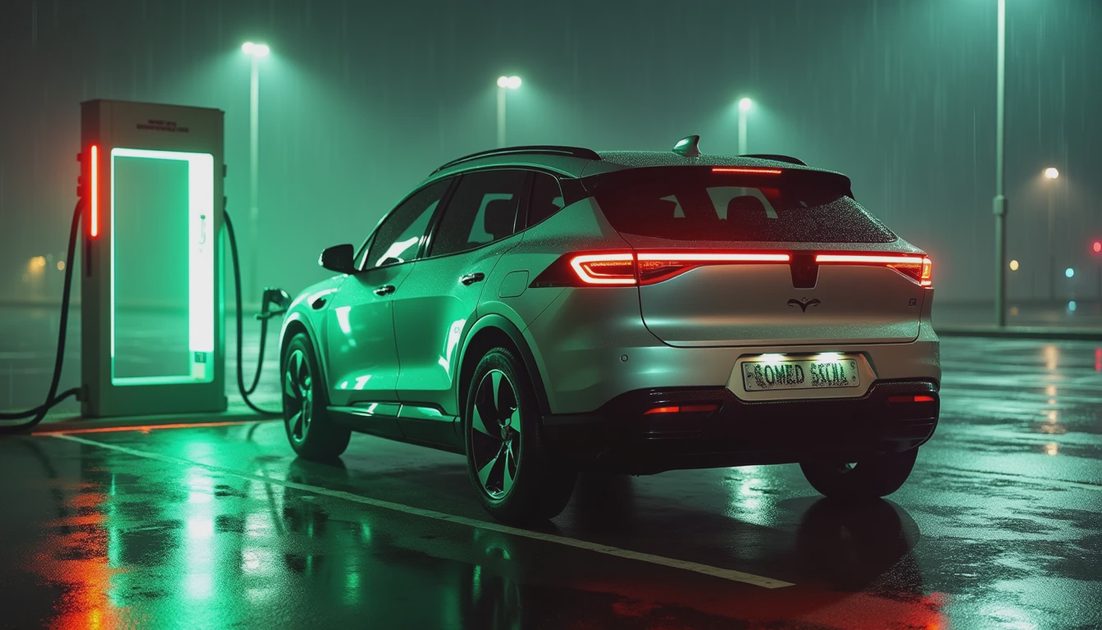
Self-driving cars won’t just change your commute—they could give America 1.3 million years back
There’s a particular sound you notice first when you’re not driving: the soft, constant hiss of tires on asphalt, the rhythmic thump of expansion joints, the city’s white noise fading into something almost… useful. Anyone who’s spent a weekday morning inching along a freeway has had the same daydream: what if the car just handled this, and you got your life back?
That’s the central promise behind self-driving cars—and it’s why the most compelling number in Duckietown’s overview isn’t about sensors or algorithms. It’s about time. In 2022, the 233 million drivers in the US spent an average of 51 hours stuck in traffic. Add that up and you get over 1.3 million human years effectively burned while staring at brake lights. Even if you don’t buy the fully autonomous future just yet, it’s hard not to feel the gravitational pull of that math.
Duckietown—an autonomous-vehicle research and education platform created by researchers at MIT’s Computer Science and Artificial Intelligence Laboratory (CSAIL)—frames self-driving tech as a sweeping shift in how we move through cities. But it’s also a very human story: less stress, fewer crashes, and more time reclaimed from the dead space between home and wherever you’re trying to get.
The most urgent “feature” isn’t flashy—it’s fewer crashes
We tend to talk about autonomy like it’s a luxury item: hands-off highway cruising, robotaxis gliding around downtown, your car dropping you off like a personal chauffeur. Duckietown cuts closer to the moral core of the pitch: safety.
Road accidents are still a daily tragedy, and the argument here is straightforward. Autonomous vehicles—packing modern sensor arrays and faster-than-human decision loops—should be able to react with more consistency than a distracted, tired, or overconfident human. Duckietown points directly at the biggest lever: removing human error, described as a leading cause of accidents.
That’s not a small claim, and Duckietown doesn’t pretend it’s magic. The site positions safety as something that has to be designed and proven, pointing to formal approaches to safe autonomous behavior—essentially, turning “trust me” into “here’s why this system behaves safely under defined conditions.” For car enthusiasts, this is the part worth respecting: it’s less “tech optimism” and more “engineering discipline.” If self-driving cars earn their place, it won’t be because they’re cool. It’ll be because they’re measurably better at not hitting things.
Traffic is the obvious enemy, but the real target is your attention
Congestion is the shared misery that makes people receptive to radical change. Duckietown’s view is that self-driving cars could navigate complex traffic scenarios with high precision by combining advances in sensing, artificial intelligence, and machine learning algorithms—the toolkit of modern autonomy.
But the more interesting angle is what Duckietown calls “time reclamation.” The technology isn’t just about moving vehicles; it’s about unchaining attention. If you’re no longer responsible for constant vigilance, the commute stops being a cognitive tax. You can work, relax, or—if you’re like most of us—simply experience the relief of not performing a low-grade task that demands high consequences.
That’s also where the societal impact sneaks in. Duckietown suggests this shift could reduce not only environmental strain from traffic inefficiency but also the psychological stress of daily congestion. Anyone who’s arrived at work already annoyed because the freeway turned into a parking lot understands the point. A commute that doesn’t require you to be mentally “on” for an hour changes how your day starts—and, in aggregate, how a city feels.
Why Duckietown exists: autonomy needs a place to fail safely
One of the smartest details in Duckietown’s positioning is its origin story. It was created by researchers at MIT CSAIL to help develop and test cutting-edge algorithms for self-driving—especially in the messy reality that real roads deliver: unpredictable conditions, complicated interactions, and the endless “nuisances” humans take for granted.
That last word matters. The gap between a clean demo and a real street is basically made of nuisances: weird lane markings, confusing signage, imperfect lighting, oddball behavior from other road users. Duckietown’s emphasis is that autonomy isn’t just one breakthrough; it’s a long march of iteration, validation, and education. If we’re serious about safety and efficiency, we need systems—and training grounds—that treat “edge cases” like the main event, because on public roads, they are.
There’s also a subtle but important shift in how this frames the story for enthusiasts. If you love driving, autonomy can sound like a threat: the end of the open road, replaced by appliances. Duckietown’s lens is different. It’s not arguing to eliminate driving as pleasure. It’s arguing to eliminate driving as forced labor—especially the kind performed in stop-and-go traffic with high stakes and low joy.
The bigger picture Duckietown sketches is not simply “cars that drive themselves.” It’s a rethinking of mobility in an era of accelerating urbanization and persistent congestion—where the most valuable commodity might not be horsepower, but hours.