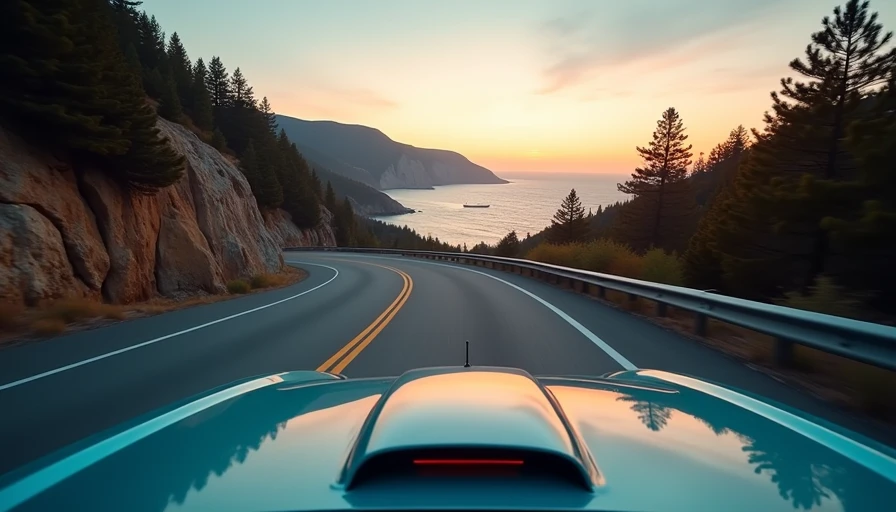
Here's what you smell first: warm pine, salt carried inland from the coast, or the faint coffee drifting from a roadside diner. You notice second how quickly the city disappears in the mirrors. A year later, what you'll remember is rarely the number of miles. It is the overlook where you pulled over, the pie you shared, and the quiet stretch of road that made everyone stop talking. Planning a scenic drive in the United States is less about collecting viewpoints than choosing a route with room for those small moments.
A good scenic drive in starts with a realistic pace. Give yourself fewer destinations than you think you can manage, leave daylight for unexpected stops, and choose a vehicle that makes long hours pleasant rather than merely possible. Whether you are driving a Subaru Outback, Ford Bronco, Volvo XC60, or a well-loved sedan, preparation turns a pretty road into a genuinely good trip.
Choose a route that has a rhythm
The best roads have contrast. A coastal route might begin with fog, open into bright ocean views, and finish near a small town with a bakery or a seafood counter. A mountain route could move from golden grassland into cool forest before ending beside a lake. That change in texture keeps the drive engaging without forcing you to stare at a map every few minutes.
For a scenic drive in California, consider the Pacific Coast Highway, the Sierra foothills, or the redwood roads north of San Francisco. In the Southwest, routes around Sedona, Arizona, and southern Utah deliver dramatic geology, while New England offers covered bridges, farm stands, and brilliant fall color. These are broad regions, not instructions to rush through every landmark. Pick one corridor and let it breathe.
Before booking lodging, open a paper map or offline mapping app. Mark fuel stations, restrooms, grocery stores, trailheads, and places where cell service may be limited. Google Maps is useful for drive times, but its estimate does not include a photo stop, a crowded overlook, or the fifteen minutes you spend deciding whether a roadside sign deserves a turn.
Match the car to the road
A scenic drive in a compact sports car can be thrilling on smooth, winding pavement, but it offers less cargo room and a firmer ride. An SUV gives you space for coolers, hiking shoes, and luggage, while a hybrid can reduce fuel stops on longer stretches. An electric vehicle can be excellent for a planned route with reliable charging, though remote areas require more attention to range and backup options.
Tire condition matters more than a polished exterior. Check tread depth, pressure, the spare or tire repair kit, windshield washer fluid, and engine oil before leaving. If the route includes gravel, steep grades, or winter weather, confirm that the vehicle and tires are appropriate. A roof box can add useful space, but it also affects handling and fuel economy; pack the cabin lightly instead of turning every trip into a moving day.
Your insurance deserves the same preparation. Liability coverage helps pay for injuries or property damage you cause to others. Collision coverage generally applies to damage from a crash, while comprehensive coverage typically addresses non-collision losses such as theft, hail, falling objects, or animal strikes. Ask whether rental-car coverage, roadside assistance, and towing limits fit the route. An inexpensive roadside add-on can be valuable when the nearest service provider is many miles away.
Build stops around food, not just photographs
The detail that made the trip: planning lunch as part of the route rather than treating it as an interruption. A scenic drive in Oregon might deserve a stop at a farm stand, while a Texas Hill Country route can be shaped around barbecue, bakeries, or a proper breakfast taco. In coastal towns, look for markets and casual counters where locals are buying food to take home. The point is not a famous reservation; it is eating something that belongs to the place.
Call ahead when a restaurant or general store is important to your schedule, especially outside major cities. Seasonal hours change, kitchens close between lunch and dinner, and a destination that looks open online may have limited service. Carry water, fruit, sandwiches, and a small cooler anyway. The best meal of the day may be the one you eat from the tailgate while watching weather move across a valley.
Leave room for an unplanned stop. A farm stand with peaches, a motel sign with terrific typography, or a short trail beside the road can become the memory that outlasts the official attraction. Skip the obvious thing. Do this instead: ask a fuel-station cashier where they would eat on their day off.

Plan for weather and changing conditions
Weather can transform a scenic drive in Colorado, Washington, or the Great Lakes region within an hour. Check the forecast before departure and again each morning. In mountain country, confirm road closures and chain requirements through the relevant state transportation agency. In desert areas, carry extra water and avoid assuming that a short hike will be easy simply because the road is accessible.
Drive the route in daylight when possible. Wildlife is more active around dawn and dusk, visibility drops quickly after sunset, and unfamiliar curves are harder to read at night. Keep fuel above a quarter tank in remote areas, download directions, and tell someone your broad itinerary. If rain begins, slow down smoothly and increase following distance rather than braking sharply in a curve.
A calm driver makes the journey better for everyone. Trade driving duties before fatigue becomes obvious, take a real break every couple of hours, and never photograph a view while moving. Pull fully off the road, use a legal turnout, and keep clear of traffic lanes. The overlook will still be there after you park.
Make the trip financially comfortable
A scenic drive in can cost more than the fuel estimate suggests. Add parking fees, park entry, tolls, lodging, meals, charging, and a reserve for tire trouble or an unplanned hotel. For a two-night domestic road trip, setting aside an extra $150 to $300 can prevent one surprise from dictating the final day. Compare hotel cancellation policies before choosing the cheapest room.
Fuel prices vary by region, and remote stations often charge more. Use a fuel or charging app to identify practical stops, but do not plan to arrive with only a few miles of range. If you are traveling in a larger SUV, a modest speed reduction can improve efficiency and make the cabin quieter. Those small savings are better spent on a memorable breakfast than on unnecessary highway detours.
Insurance pricing also reflects factors such as location, driving history, vehicle type, coverage limits, and deductible. Get quotes from several insurers, including companies such as GEICO, Progressive, State Farm, and regional carriers, then compare the actual protections rather than only the monthly premium. A $500 deductible and a $1,000 deductible can produce different rates, but the higher amount must be affordable after a loss.
A simple departure checklist
The night before a scenic drive in, save the route offline and write down the next fuel stop. Charge phones, pack water, sunglasses, layers, snacks, a first-aid kit, and a flashlight. Photograph the vehicle from each side if you are using a rental car, and note existing damage before leaving the lot. Confirm lodging, weather, road conditions, and any reservation that anchors the day.
On the morning departure, check tire pressure when the tires are cold. Put heavier bags low and secure loose objects so they cannot become projectiles during hard braking. Set navigation before moving, silence unnecessary notifications, and keep a physical payment card available in case a remote station has unreliable service.
The ideal scenic drive in is not the one with the most miles or the longest list of viewpoints. It is the route that leaves enough time to pull over, taste something local, and arrive with energy for dinner. Choose a road that suits your car, protect the trip with sensible coverage, and let the landscape set the pace.