The first thing you smell on a good drive is coffee from the travel mug in the console, followed by warm asphalt and whatever bakery the GPS has just discovered. Road trips on a budget do not have to mean eating crackers in a parking lot or choosing the cheapest motel beside the highway. With a little planning, you can spend deliberately on the moments that matter: the scenic detour, the memorable meal, and the quiet room at the end of a long day.
The goal is not to make every mile inexpensive. It is to stop small, forgettable expenses from crowding out the experiences you actually wanted. Start with a destination, a flexible route, and a realistic total budget that includes fuel, lodging, food, activities, tolls, parking, and a reserve for surprises.
Build the trip around the expensive decisions
Before opening a hotel app, decide which parts of the journey deserve money. A three-night trip can look very different depending on whether you spend $450 on lodging, $180 on restaurants, and $120 on activities, or reverse those priorities. I usually protect one excellent meal and one especially beautiful stay, then make the surrounding choices simpler.
For road trips on a budget, distance is often the largest variable. A 1,200-mile loop in a vehicle that averages 24 miles per gallon uses about 50 gallons. At $3.50 per gallon, fuel alone is roughly $175. An efficient hybrid such as a Toyota RAV4 Hybrid or Honda CR-V Hybrid can reduce fuel use, while a larger SUV may provide more comfort but raise the operating cost. Use your vehicle's real-world fuel economy rather than the most flattering number on the window sticker.
Choose a route with a purpose. If a national park, coastal highway, or small-town food stop is the reason for the trip, do not add three hours of driving just to collect another destination. The cheapest mile is the one that does not leave you too tired to enjoy where you arrive.
Cut fuel and car costs before leaving
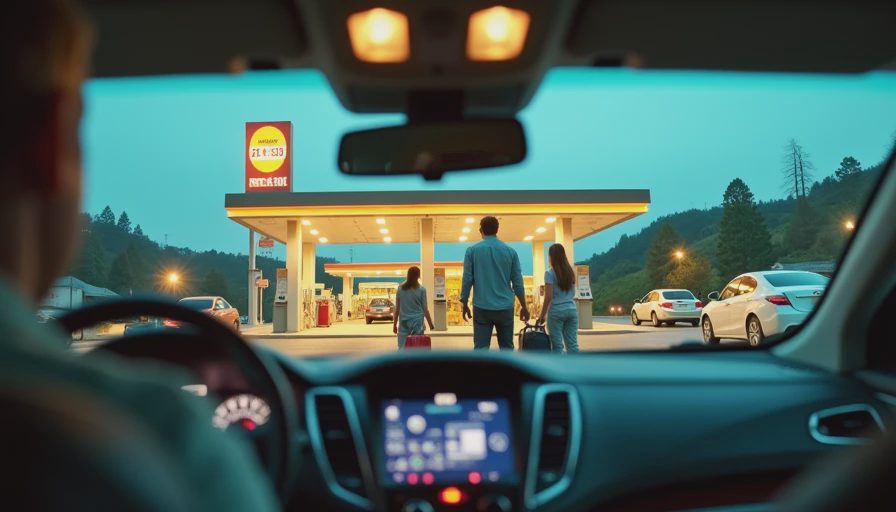
A ten-minute pre-trip inspection can prevent a surprisingly expensive interruption. Check tire pressure when the tires are cold, top off windshield washer fluid, inspect the spare or tire repair kit, and confirm that the oil service is current. Underinflated tires can reduce efficiency and increase wear, while an overdue maintenance item can turn a planned $40 stop into a tow and repair bill.
Pack for the conditions rather than for every imaginable emergency. A phone charger, flashlight, basic first-aid kit, water, blanket, and paper copies of key information are sensible. If you drive an EV, map charging locations before entering rural areas and compare charging networks. A hotel with overnight charging can be more valuable than a slightly cheaper room that requires a separate morning detour.
Insurance deserves a place in the planning spreadsheet. Liability coverage pays for injuries or property damage you cause, while collision coverage generally applies to damage to your vehicle from a crash. Comprehensive coverage typically addresses non-collision losses such as theft, hail, or a fallen branch. Review deductibles and roadside assistance before departure. A $500 deductible can be easier to manage than a $1,500 deductible after a collision, but lowering it can increase the premium.
When comparing quotes, look at the full policy rather than chasing the lowest monthly price. GEICO is widely known for a direct, digital shopping experience, Progressive often emphasizes comparison tools and usage-based options, and State Farm relies heavily on local agents. Pricing depends on the driver, vehicle, location, limits, and history, so compare equivalent coverage from several carriers before you pack the trunk.
Spend less on lodging without making sleep miserable
Lodging is where road trips on a budget can quietly become expensive. Search beyond the most obvious downtown hotel, but do not assume the lowest nightly rate is the best value. Add parking, resort fees, pet charges, breakfast, and the cost of driving back into town. A $129 room with free parking and breakfast may beat a $99 room with a $35 parking fee and no easy morning coffee.
For a one-night stop, a clean limited-service hotel near the highway can be practical. For two or three nights, a small apartment or suite with a refrigerator and basic kitchen can reduce restaurant spending without turning the trip into a cooking project. I like to buy yogurt, fruit, good bread, and local cheese for breakfast or a late arrival. That leaves more room in the budget for one meal worth sitting down for.
Book refundable rooms when the price difference is modest. Routes change, weather interrupts plans, and the perfect roadside stop sometimes appears 40 miles earlier than expected. Membership programs from chains such as Marriott, Hilton, and IHG can provide useful points or occasional member pricing, but loyalty is worthwhile only when the location and total price still make sense.
Make food part of the value, not the leak
A cooler is one of the best tools for road trips on a budget, especially when it holds ingredients instead of a parade of gas-station snacks. Bring cold brew, fruit, sparkling water, sandwiches, and a container for leftovers. Even replacing two $18 fast-food stops with packed meals can save enough to pay for a regional specialty later.
Do not eliminate every spontaneous stop. Set a daily food amount, perhaps $45 to $75 per person depending on the destination and style of travel. Use breakfast as the flexible meal, lunch for a counter-service find, and dinner for the place you researched in advance. A local diner, farm stand, or bakery can deliver more character than a familiar chain while keeping the bill manageable.
The detail that made one of my favorite drives was not an expensive reservation. It was pulling over with a paper bag of still-warm pastries, eating beside the car, and watching fog lift from a valley. Budget choices often improve the texture of a trip because they slow you down enough to notice what is around you.
Create a practical daily budget
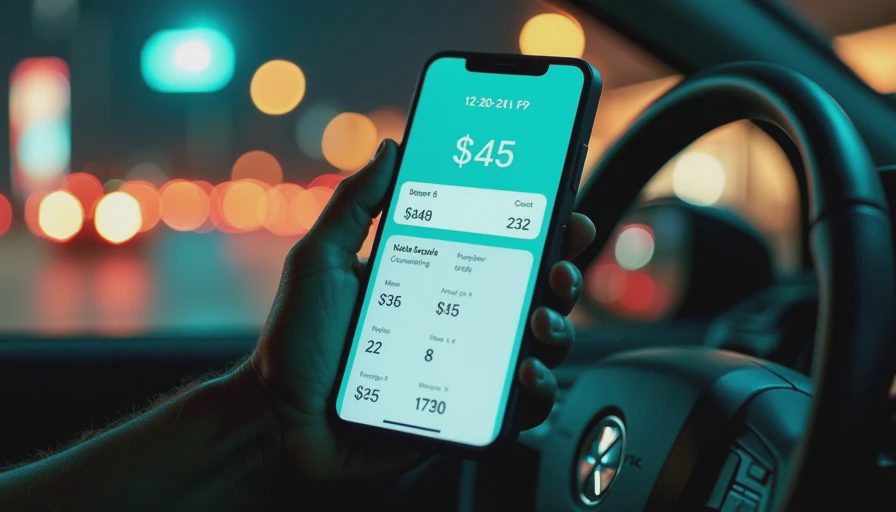
Give every day four numbers: fuel, lodging, food, and experiences. Add a fifth line for parking and tolls, then keep a reserve of at least $100 to $200 for a shorter trip or more for a longer one. This is not pessimism; it covers a tire issue, a last-minute room, an unexpected ferry, or the simple desire to say yes to something memorable.
For example, a four-day loop might allocate $190 for fuel, $520 for lodging, $280 for food, $160 for activities, and $120 for tolls, parking, and a reserve. The $1,270 total is easier to manage than a vague promise to spend as little as possible. If lodging rises by $100, you can see immediately whether to shorten the route, cook one more meal, or skip a paid attraction.
Use a shared note or spreadsheet while traveling. Record purchases the same day, because small charges disappear quickly when they are mixed with coffee, snacks, and parking apps. Bring one payment card with travel protections if appropriate, but keep a backup card and some cash for rural businesses or unreliable cell service.
Protect the trip while keeping the plan flexible
The best road trips on a budget leave room for a change of mind. Avoid nonrefundable bookings for every night, allow shorter driving days when possible, and check weather before committing to mountain or desert routes. Saving $80 on a room is not a victory if it creates a dangerous late-night drive or forces you to miss the meal and view you planned the trip around.
Before departure, save reservation numbers, download offline maps, photograph the vehicle's condition, and confirm what roadside assistance includes. Some plans cover towing only for a limited distance, while others include lockout service, jump starts, or flat-tire help. Knowing the terms is more useful than discovering them from a shoulder at midnight.
A year later, what I still think about is rarely the cheapest gas station or the room with the smallest bill. It is the long stretch of empty road, the excellent sandwich eaten outside, and the feeling that the trip had enough structure to be comfortable but enough space to surprise me. Plan the fixed costs, insure the risks you cannot absorb, and spend intentionally on the details you will remember.