The numbers landed like a low cloud over the Front Range last week. U.S. light-vehicle sales in October settled at a seasonally adjusted annual rate of about 15.5 million units—15.54 million according to the Bureau of Economic Analysis data that feeds FRED, or a clean 15.5 million in the early reads from TD Economics and Cox. That is down from roughly 16.0 million in September and the softest month of 2026 outside of January’s weather-battered 15.0 million. Consensus had leaned closer to 15.8. The market missed.
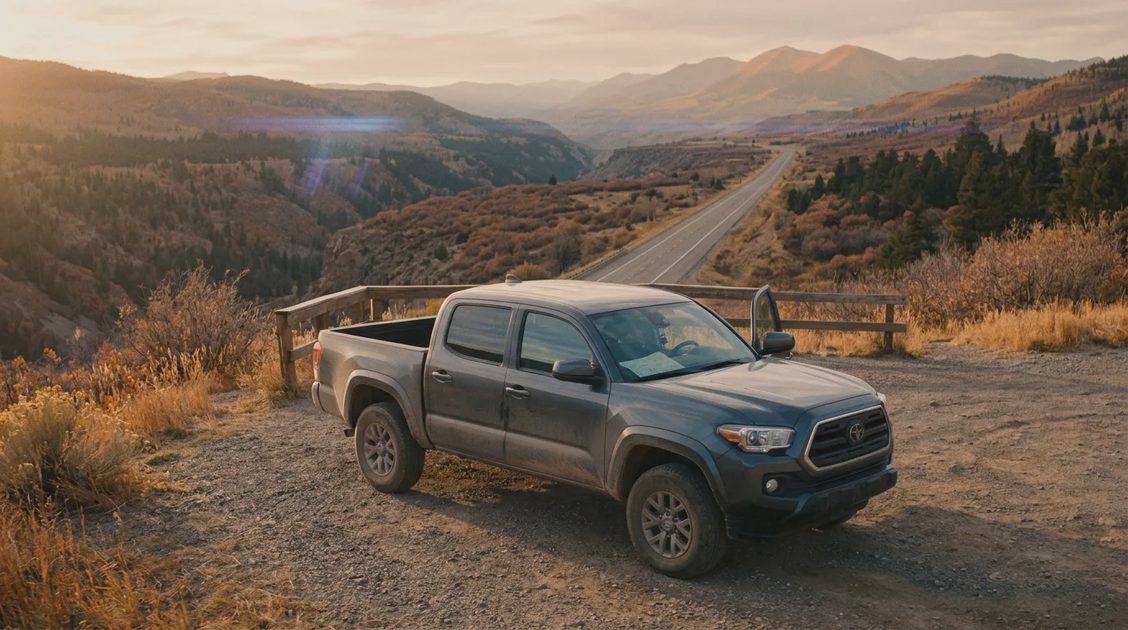
I was somewhere east of Leadville when the first reports filtered through, the kind of high-country light that makes every surface look like it was lit by a gaffer who cares about skin tones. My project car—an older BMW wagon that has collected more modifications than sense—was idling at a pull-out, the cabin smelling of hot oil and the last of a thermos of coffee. Sales numbers do not usually interrupt a view like that. This one did. Because the story underneath the SAAR is not abstract. It is the sound of people doing the math at the kitchen table and deciding the next chapter of the road trip can wait.
The Affordability Trap That Will Not Loosen
Average new-vehicle transaction prices have hovered near or above $50,000 for months. September’s Kelley Blue Book figure sat at $50,562—within striking distance of the record. October did not suddenly become cheap. At the same time, the financing side of the ledger has grown heavier. Edmunds data for the third quarter showed average monthly payments on financed new vehicles at $787, with a record 21.2 percent of buyers committing to $1,000 or more each month. JD Power’s October forecast put the average payment even higher, around $823, as rates edged up. One in four new-vehicle loans now stretch to 84 months or longer.

That is not a footnote. That is the new normal for a large slice of the market. Longer terms keep the payment from looking catastrophic on paper, but they also mean more total interest, more months of negative equity risk, and less room for the unexpected—new tires, a transmission, or the sudden need to move for work. High fuel prices compound the pressure. Even after some recent softening, gasoline remains substantially more expensive than a year earlier in many markets. The combination of sticker, rate, and pump creates a quiet veto power. People still want the vehicle. They just want it less urgently than the payment requires.
Hybrids continue to gain share because they offer a partial escape hatch: better real-world fuel economy without the full infrastructure leap of a pure battery electric. Conventional hybrids have been running in the mid-teens of total market share for much of the year. Battery-electric volume, by contrast, has lost ground since the expiration of the previous federal tax credit cycle. The market is sorting itself into what buyers can actually live with day to day, not what the press releases promised two years ago.
What the Dealership Floor Feels Like
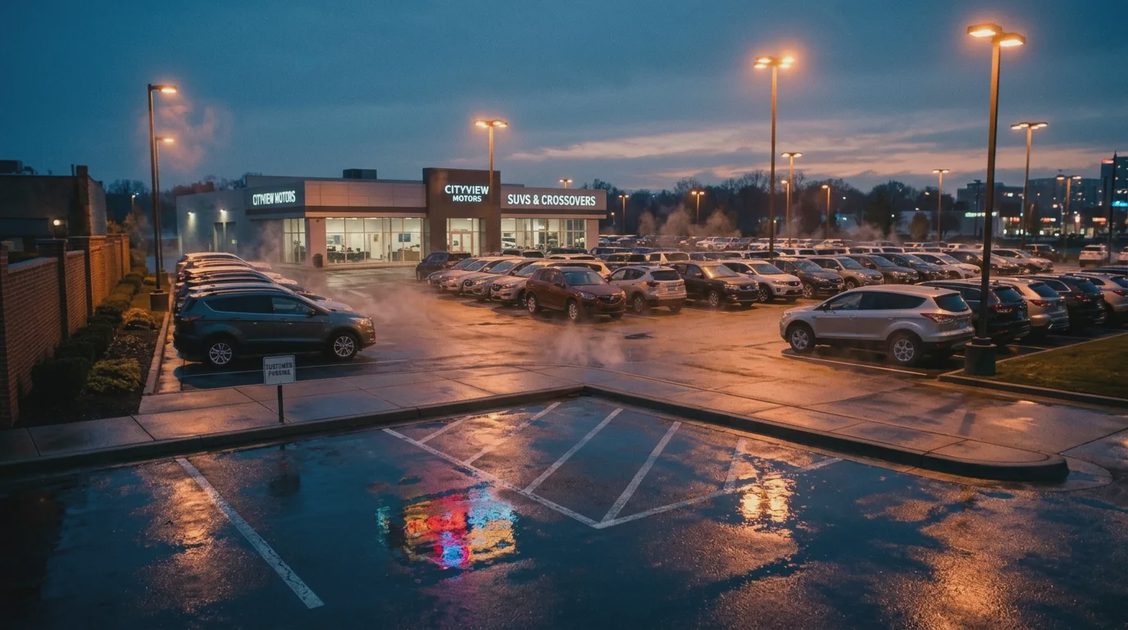
Walk a lot in late afternoon and the atmosphere has changed. Inventory is not scarce the way it was in 2021–22. Days’ supply has climbed. Incentives have started to creep higher, especially from the Detroit Three, yet volume still softens. That tells you the problem is not primarily supply. It is the gap between what the average household can stretch and what the average new vehicle now costs to own.
Light trucks still dominate—roughly 84 percent of the mix in October—because that is what Americans buy when they have the means. Full-size pickups and three-row crossovers remain the volume anchors. The trouble is that those vehicles sit at the expensive end of the spectrum. The more affordable compact cars and smaller crossovers exist, but they are a shrinking share of both production and mindshare. The industry has optimized for the profitable middle and upper tiers. The lower rungs of the K-shaped economy are increasingly left looking at used inventory or simply waiting.
I keep thinking about the last long trip I took through the Great Basin. Fuel stops every couple of hours, the same conversation at every pump: “These prices are ridiculous.” The people saying it were not complaining about luxury. They were calculating whether the weekend in the mountains was still worth the tank. Multiply that calculation by millions of households and you get a 15.5 million SAAR.
Looking Past the Soft Month
Full-year forecasts have not collapsed. NADA and others still see the industry finishing near or slightly above 16.0 million units for 2026. October was soft, but it is only one month, and January’s weather-distorted result remains the true floor so far. Fleet activity has held up better than retail in some reads. The underlying replacement cycle has not disappeared; people still need reliable transportation, and the average age of the U.S. fleet remains elevated.
What has changed is the margin for error. Higher Treasury yields have begun to show up more clearly in auto loan rates. Any reacceleration in energy prices or broader inflation will tighten the noose further. Conversely, a sustained drop in fuel costs and a stabilization of rates could unlock some of the deferred demand sitting on the sidelines. The next two months will tell us whether October was a temporary dip or the start of a more cautious fourth-quarter posture.
From the driver’s seat the larger story feels personal. A vehicle is still the ticket to the places that make the rest of life make sense—the high passes, the empty stretches of two-lane blacktop, the small towns where the diner still serves real pie. When the monthly payment starts to crowd out the ability to point the car at those places, something essential is lost. The industry can talk about mix and incentives and SAAR all day. The real constraint is whether ordinary people can still afford to keep the story moving.
I finished the coffee, put the wagon back in gear, and rolled down toward the valley as the light went blue. The road was empty. The numbers will keep coming every month. The question is whether the next set of numbers will leave enough room for the horizon.