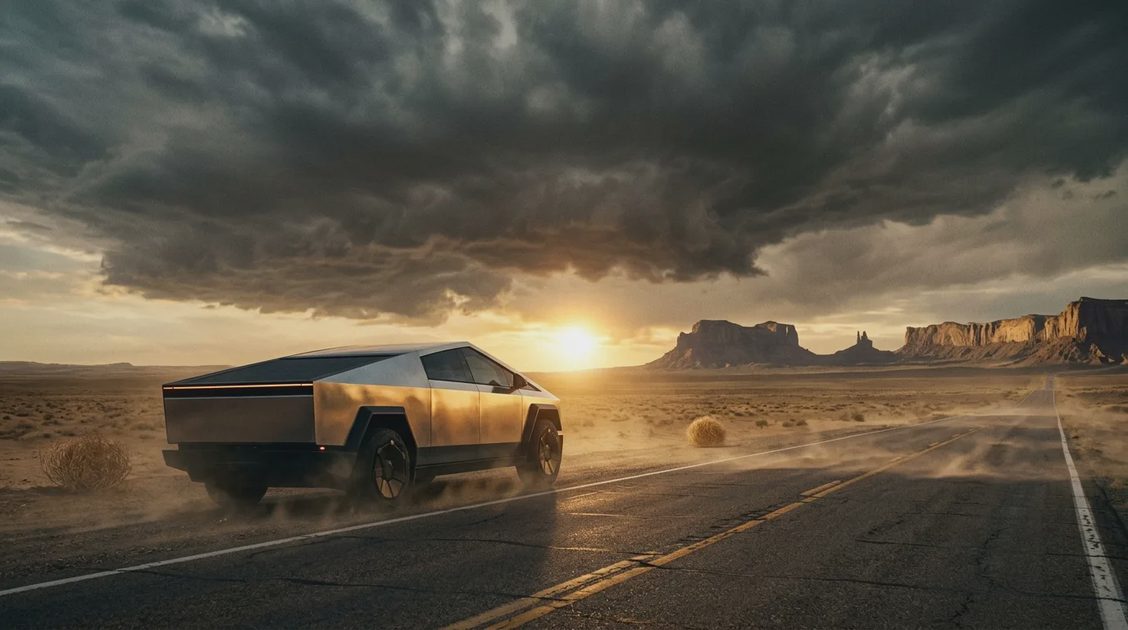
The stainless wedge never asked for permission. It arrived like a prop that escaped the storyboard—sharp enough to cut the air, reflective enough to throw every roadside gas station and red-rock canyon back at you in distorted shards. For a few years it felt like the purest expression of Tesla’s mid-period swagger: build the thing that looks like the future and dare the market to catch up. Now the call sheet has changed. Around the middle of 2027, production of the Cybertruck at Gigafactory Texas will begin winding down so the plant can make more Cybercabs.
That single sentence from Elon Musk lands with the weight of a location scout closing a set. The truck that was supposed to rewrite the American pickup is being moved out of the way for the robotaxi that is supposed to rewrite personal mobility. The timing is not subtle. Sales never approached the 250,000-unit annual fantasy once floated. Lifetime deliveries sit in the low tens of thousands. The vehicle that once dominated reservation lists and meme cycles has settled into a niche that is passionate, visible, and simply too small to justify the specialized line it requires.
A short, loud chapter closes
I still remember the first time I saw one in the wild on a Colorado two-lane. The light hit the body panels and the whole vehicle looked like a piece of folded light rather than painted metal. People either slowed down to stare or accelerated past with visible irritation. That reaction was the product’s real fuel for a while. It was never going to be the quiet volume king. It was the statement piece that proved Tesla could still make something no legacy truck maker would touch.
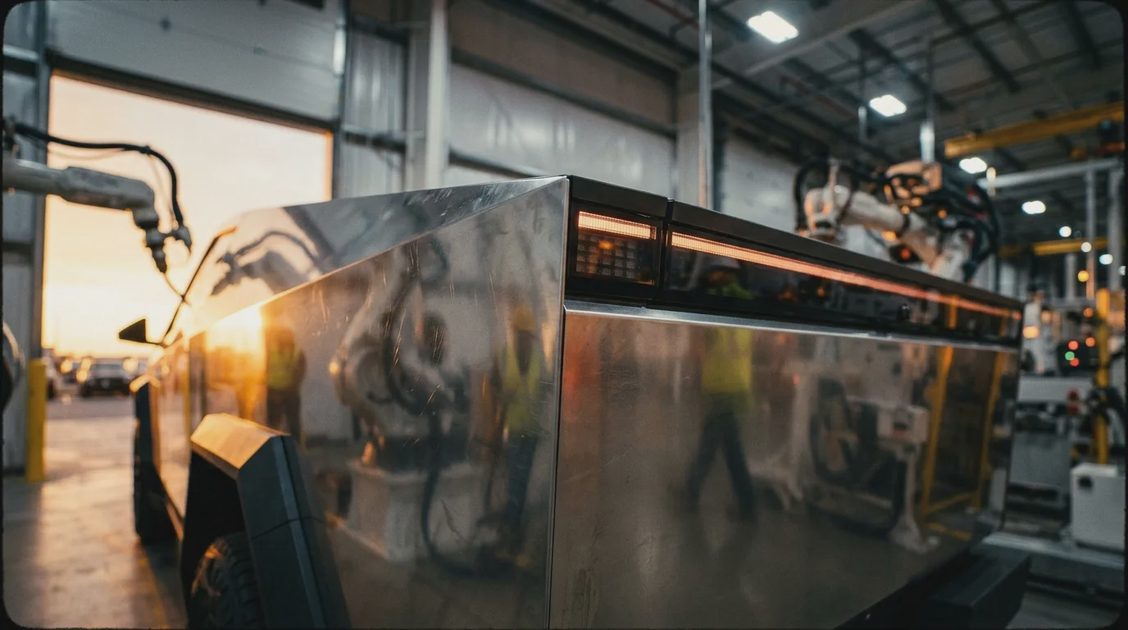
The numbers, however, refused to cooperate with the mythology. After the initial surge of early adopters and reservation holders, demand cooled. Estimates put U.S. sales near 39,000 in 2024 and roughly half that the following year. “Other models” deliveries—where Tesla parks the Cybertruck alongside the remaining S and X volume—continued sliding into 2026. By the third quarter the category was moving fewer than 8,300 units. Capacity at Giga Texas for the truck was listed above 125,000 annually. The line was never close to full.
Musk’s phrasing is careful: “winding down” at Gigafactory Texas “around the middle of next year” to make room for increased Cybercab production. He later clarified the company is still building trucks for another eight or nine months and will add an extra shift to clear the existing order backlog before the line is dismantled around June or July 2027. The Cybertruck fleet, he noted, will be around for a long time. Lead engineer Wes Morrill framed the truck as an “incredible technology development platform” whose lessons live on in the Cybercab. Parts and service support will continue. No one has said the model is permanently dead everywhere, but Austin is the only plant equipped for its specialized components. Moving the line would be an expensive act of nostalgia.
Capacity is destiny when the next bet is bigger
Walk the floor of a modern auto plant and you feel the real constraint immediately: square meters, robot reach, and the number of unique body architectures a single site can profitably support. The Cybertruck’s stainless-steel exoskeleton, structural battery pack, and unique closures made it a demanding roommate. The Cybercab is a two-seat, purpose-built robotaxi with no steering wheel or pedals in its purest form. It is simpler in some respects, denser in others, and—most importantly—central to the autonomy story Tesla is telling investors and regulators.
Tesla has already begun offering limited Cybercab rides in Austin. Expanding that fleet, and eventually selling the vehicle to other operators or private owners at a targeted sub-$30,000 price, requires volume. Floor space that once stamped and assembled angular pickups is being reallocated. The same plant also builds Model Ys. Something had to give. The truck with the softer demand curve lost.
This is not the first time Tesla has pruned a model to feed a higher-priority program. The Model S and X lines have been treated similarly as robotics and autonomy claims more of the company’s attention. The pattern is consistent: protect the volume platforms, protect the software and autonomy roadmap, and let the passion projects that under-deliver on volume make way. From a pure capital-allocation perspective the move is rational. From the perspective of someone who still likes the idea of a stainless-steel spaceship that can tow a trailer into the desert, it stings a little.
What the truck actually taught us
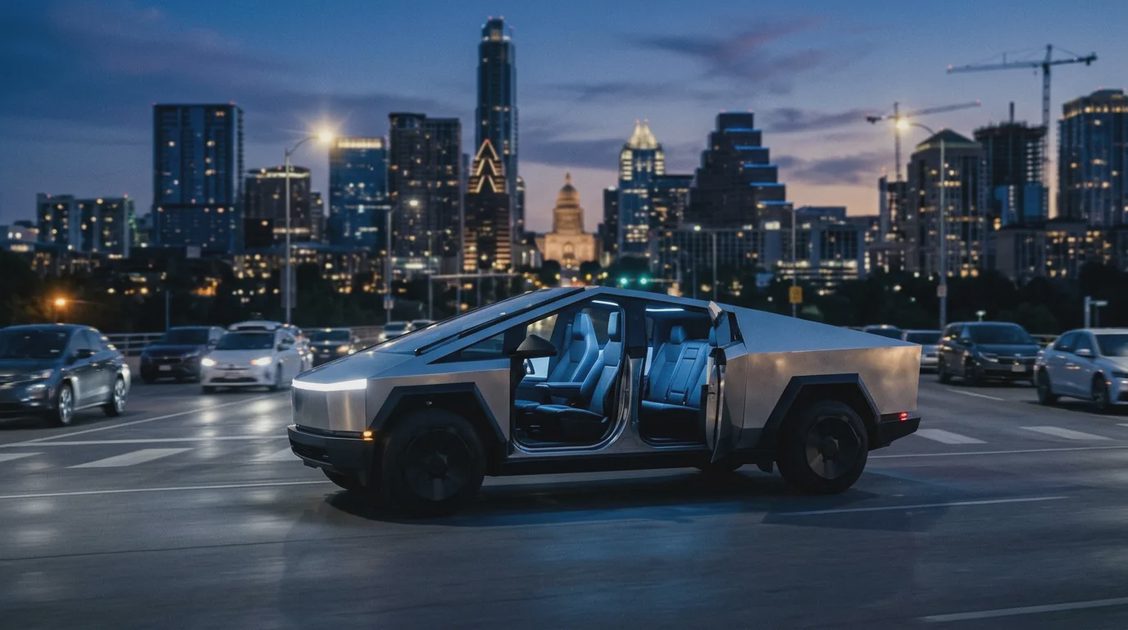
Strip away the hype cycle and the Cybertruck still delivered several real advances. The structural battery pack, the 48-volt electrical architecture experiments, the steer-by-wire system, and the extreme durability targets all pushed Tesla’s engineering teams into new territory. Some of those lessons transfer directly to the Cybercab and to future vehicles. Morrill’s comment about the truck living on through the robotaxi is not pure PR. Platforms rarely die cleanly; their DNA migrates.
On the road the vehicle was a mixed bag that rewarded the right kind of trip. Range was competitive for an electric truck. Acceleration was absurd. The vault and the power outlets made it a genuine adventure tool if you planned around charging. The ride could be harsh, the visibility quirky, the panel gaps a recurring quality conversation in the early months. It never pretended to be a conventional pickup. That honesty was both its charm and its ceiling. Most buyers still wanted something that looked like a truck and could disappear into a jobsite parking lot without becoming the main character.
I have driven enough project cars and rental test vehicles across the West to know that polarizing design ages in two ways. Either it becomes a beloved classic that people chase years later, or it becomes a curiosity that sits in barns while more practical successors take the daily miles. The Cybertruck has a better chance than most of landing in the first category simply because so few were made relative to the attention it received. Scarcity is already baked in.
The road ahead for owners and the rest of us
If you already own one, the practical questions are straightforward. Tesla has signaled continued parts and service support. The software updates that keep the truck feeling current will likely continue for years. Resale values may actually firm up once production ends—collector interest in limited-run oddballs is real. The bigger cultural question is whether the Cybertruck becomes the last truly wild production Tesla before the company fully pivots to robotaxis, Optimus, and higher-volume, lower-drama vehicles.
For the rest of the industry the message is clearer. Capacity is finite. Autonomy is the stated priority. If your product does not move enough metal or advance the core software story, its days on the line are numbered. Legacy truck makers watching from Detroit and Dearborn can take some quiet satisfaction that the stainless disruptor never stole their volume lunch. They should also notice how quickly Tesla is willing to reallocate resources once the data arrives.
I will miss seeing them on the highway. There is something irreplaceable about a vehicle that refuses to look like every other vehicle. In an era of increasingly homogenized EV design language, the Cybertruck was a middle finger made of cold-rolled steel. It forced conversations. It looked ridiculous and magnificent in equal measure depending on the light and the observer’s mood. That is rarer than good range numbers.
Sometime next summer the last examples will roll off the Texas line. A few more will clear the backlog. Then the robots that once assembled angular pickups will start assembling the quiet, wheel-less pods that are supposed to ferry us through cities while we look at our phones. Progress is rarely polite about what it leaves behind. The Cybertruck got a louder exit than most vehicles ever receive. For a machine that always preferred to make noise, that feels about right.
The highway is still out there. The light still hits metal the same way. The next chapter just has fewer sharp edges and more autonomy software. I will keep watching the horizon for whatever comes next—preferably something that still makes me want to take the long way home.