You notice it first in the parking spot: a small amber, red, or pink puddle beneath the front of the car, followed by a low groan when you turn the wheel. The power steering fluid leak cost can be modest when a hose clamp is loose, or surprisingly high when a steering rack is failing. Either way, catching the problem before a long drive is easier on your wallet and your nerves.
Power steering systems use pressurized fluid to help you turn the wheel. A leak lowers that pressure, makes steering heavier, and can eventually damage the pump. A typical repair falls somewhere between about $150 and $1,500, though luxury vehicles, difficult access, and electronic steering systems can change the estimate. The useful question is not simply what the repair costs, but where the fluid is escaping.
What Determines the Repair Price
The power steering fluid leak cost depends mainly on the failed component and how much labor is required to reach it. A cracked return hose is often the simplest fix. Parts may cost $20 to $80, with total shop pricing commonly landing around $125 to $300. A high-pressure hose uses stronger fittings and may run $250 to $600 installed.
A worn pump is a larger job. Replacement pumps for common vehicles can range from $150 to $500 before labor, producing a total estimate of roughly $400 to $900. On some SUVs and luxury sedans, the pump is crowded behind other components, so labor can add several hours. A leaking steering rack is usually the most expensive conventional repair, often costing $800 to $1,800 or more after parts, labor, fluid, and alignment.
The detail that made the difference in one inspection is often the fluid's location. Fluid near the front of the engine may point to a pump or pressure line, while wetness inside a front wheel area can suggest a rack seal. A clean, written estimate should identify the source rather than recommend replacing several parts at once.
Signs You Should Not Ignore
A low-fluid warning, whining noise, or steering wheel that suddenly feels heavier deserves attention. You may also see fluid streaks on the driveway, especially after parking overnight. Some leaks appear only while the engine is running because the system builds pressure during operation. That is why a dry-looking reservoir does not always mean the system is healthy.
Driving a short distance to a repair shop is sometimes possible when steering still feels normal, but a rapidly dropping fluid level is a different situation. Running the pump without enough lubricant can turn a hose repair into a pump replacement. If the wheel becomes difficult to turn, stop somewhere safe and arrange a tow. Roadside assistance coverage can help with towing, but standard auto insurance generally does not pay to repair mechanical wear or an aging seal.
Do not pour in a random bottle of fluid simply because the color looks familiar. Some vehicles specify power steering fluid, while others require automatic transmission fluid or a manufacturer-specific product. Using the wrong fluid can damage seals. Your owner's manual or a technician should confirm the specification before topping off the reservoir.
A Practical Price Comparison
For a loose clamp or small return hose, a driver might spend $100 to $300. A pressure hose usually brings the bill to $250 to $600, depending on the vehicle. Pump replacement commonly lands between $400 and $900. Rack-and-pinion replacement can reach $1,000 to $2,000 when alignment and related hardware are included.
Those ranges explain why two repair shops can quote very different numbers without either one being dishonest. A dealership may use an original-equipment pump and charge a higher hourly labor rate. An independent shop might offer a reputable remanufactured unit, which can lower the parts bill. Ask whether the quote includes fluid, bleeding air from the system, disposal fees, and a wheel alignment if the rack must be removed.
A useful comparison is the cost of postponing the job. A $180 hose repair can become a $700 pump repair if the system runs dry, and a steering problem on a road trip can add towing, a hotel night, and a missed reservation. That is rarely the kind of travel story anyone wants to remember.
How to Confirm the Source
Start with the engine off and the vehicle parked on level ground. Check the fluid reservoir and note whether the level sits below the minimum mark. Place clean cardboard under the front of the vehicle overnight. The color and position of the drops provide clues, but they do not prove the source because fluid can travel along brackets and splash shields.
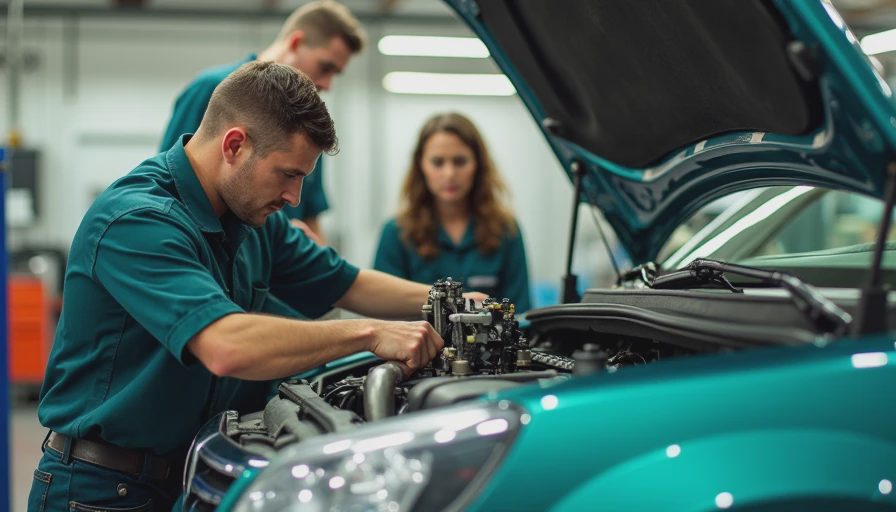
A technician can clean the area, run the engine, and inspect the system while someone gently turns the wheel. The leak may become visible at a hose crimp, pump shaft seal, rack boot, or connection. Ask for a photograph of the failed part if the location is difficult to see. This simple step makes it easier to compare quotes and avoid approving unrelated maintenance.
If the fluid is thick, dark, or smells burned, mention that when booking the appointment. Contaminated fluid can accelerate wear, although flushing the system alone will not repair a leaking seal. The right sequence is to identify the leak, replace the failed component, refill with the specified fluid, and verify that the steering operates quietly afterward.
Choosing Between Repair Options
Original-equipment parts are often the safest choice for a newer vehicle, especially one still under a parts or factory warranty. Quality aftermarket hoses and pumps can be sensible for an older Honda, Toyota, Ford, or Subaru when the manufacturer-equivalent part has a solid warranty. Remanufactured pumps and racks can reduce the bill, but ask about the warranty period and whether the shop handles a replacement if the unit fails.
A very low quote deserves a few questions. Is the shop replacing the leaking part or only adding fluid? Is labor included? Does the estimate include a system flush, belt inspection, and alignment? A $200 quote that omits necessary labor may become more expensive than a $500 quote that includes everything. Compare the repair plan, not just the first number on the page.
For many older vehicles, the power steering fluid leak cost should be weighed against the car's condition. Spending $1,200 on a rack may make sense when the vehicle has strong maintenance records, good tires, and no major rust. If it also needs brakes, suspension work, and an overdue timing service, ask the shop for a broader repair forecast before committing.
Protecting Your Budget Before the Next Drive
Auto insurance generally treats a fluid leak as mechanical breakdown, not an accident, so collision and comprehensive coverage usually will not pay for the repair. Comprehensive coverage can apply when a covered event, such as theft or certain storm damage, causes related damage, but it is not a substitute for maintenance. Roadside assistance is more relevant if the vehicle becomes disabled and needs towing.
Before a weekend trip, look beneath the car, check fluid levels, and listen during slow parking-lot turns. Save the shop's inspection report and ask about the repair warranty. If you are shopping for coverage, compare deductibles, towing limits, rental reimbursement, and roadside assistance rather than focusing only on the monthly premium.
The power steering fluid leak cost is easiest to manage when the leak is still a hose, clamp, or accessible seal. A quick inspection now can protect both the steering system and the trip you planned around it. Here's what you smell first, what you notice second, and what you'll remember a year from now: the small warning you acted on before it became a roadside interruption.