
The numbers landed like a low-frequency vibration through the floorboards. In 2025 the U.S. light-vehicle market climbed to roughly 16.3 million units—solid growth after years of supply-chain scars—yet the story underneath the headline was quieter and more unsettling for anyone who still measures Detroit by its old yardsticks. General Motors finished the year as America’s top seller with about 2.85 million vehicles and roughly 17 percent share. Toyota sat right behind at 2.52 million and 15.5 percent. Ford held third near 2.2 million. Stellantis, the third leg of the old Detroit Three, slipped further, landing around 1.26 million units and a market share that has now spent years in freefall.
Those figures look respectable on a spreadsheet. Lived on the road they feel different. Drive long enough between Denver and the coasts and you start noticing the parking lots: more RAV4s and Camrys with the subtle hybrid badges, fewer pure-gas midsize sedans that Detroit largely abandoned, and a growing sense that the old hierarchy is being rewritten one fuel-efficient mile at a time.
The Numbers Behind the Pressure
Full-Year 2025 Snapshot and the Narrowing Gap
GM’s 5.5–6 percent gain in 2025 was real. The Silverado and Sierra still print money. Cadillac posted its best numbers in a decade. Yet the margin over Toyota shrank in relative terms because Toyota grew faster—about 8 percent—on the back of an electrified mix that reached 47 percent of its volume. Electrified, in Toyota’s case, mostly means hybrids. Pure battery-electric volume across the industry cooled sharply after the federal tax credit expired, while hybrid demand kept climbing.
Stellantis remained the clearest illustration of structural strain. Its U.S. share has drifted from the low teens a decade ago toward the high single digits. Jeep and Ram still move metal, but the broader portfolio has struggled to keep pace with changing buyer priorities around efficiency, reliability perception, and residual value. Ford, meanwhile, rode the F-Series to another strong year and posted healthy hybrid gains of its own, yet still finished well behind both GM and Toyota.
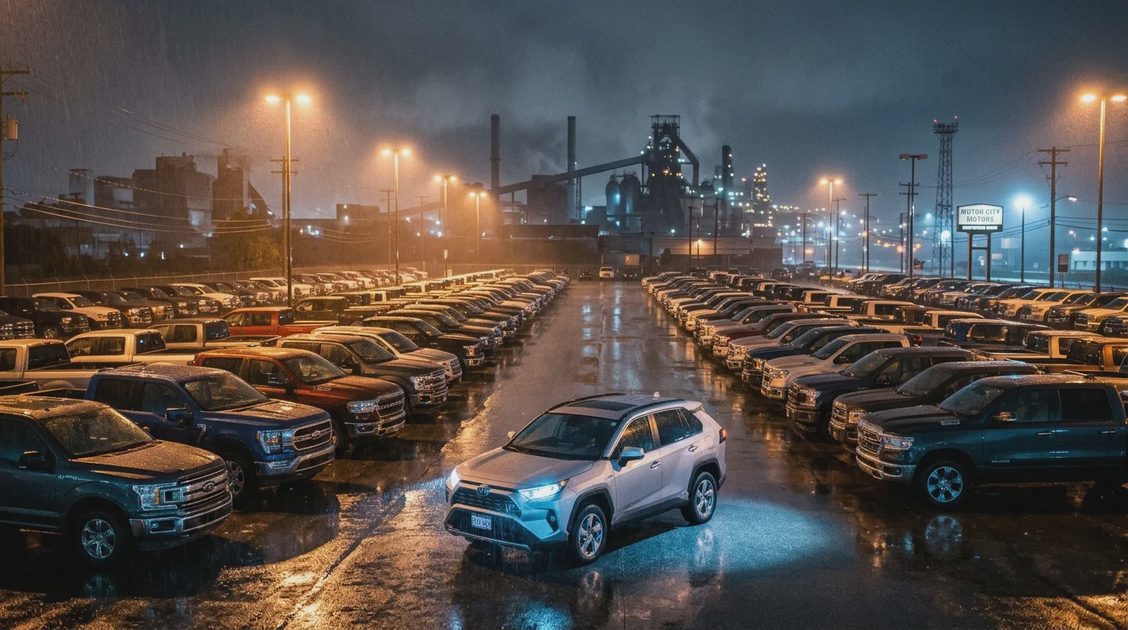
By the third quarter of 2026 the trend lines had sharpened. Cox Automotive data and manufacturer reports showed the combined Detroit Three share dipping toward 36 percent—its lowest recorded level—while Asian brands collectively crossed the 50 percent threshold for a second consecutive quarter. Toyota’s quarterly volume sat within roughly 38,000 units of GM’s. Year-to-date the gap had narrowed dramatically from the 335,000-unit cushion GM held at the end of 2025. High gasoline prices (national averages touching the mid-$4 range at points) acted as an accelerant. Buyers who might once have stretched for a full-size truck or a pure EV began calculating real-world fuel costs again, and Toyota’s deep hybrid bench was waiting.
Why Hybrids Became the Deciding Factor
Walk any dealership lot in the Mountain West and the pattern is tactile. The Toyota section smells of fresh plastic and quiet competence; the trucks sit heavier, more imposing, their beds still the tool of choice for real work. Yet the hybrid versions of the RAV4, Camry, Highlander, and even the Tacoma and Tundra keep leaving the lot. Toyota offers more than thirty electrified powertrains across its brands. GM’s mainstream hybrid presence remains thin. Ford has the Maverick and F-150 hybrids and has leaned into them hard. Stellantis has lagged further.
This is not a morality play about electrification. It is simple product positioning meeting a market that has grown wary of pure EV range anxiety and infrastructure gaps while remaining sensitive to pump prices. When fuel costs spike, the hybrid’s dual-nature advantage—engine when needed, electric assist when it counts—becomes the practical middle path. Detroit’s decades-long retreat from passenger cars and smaller crossovers left that middle path largely to the imports. The trucks still dominate the profit pool, but volume share is a different conversation.
On the Road: What the Shift Feels Like
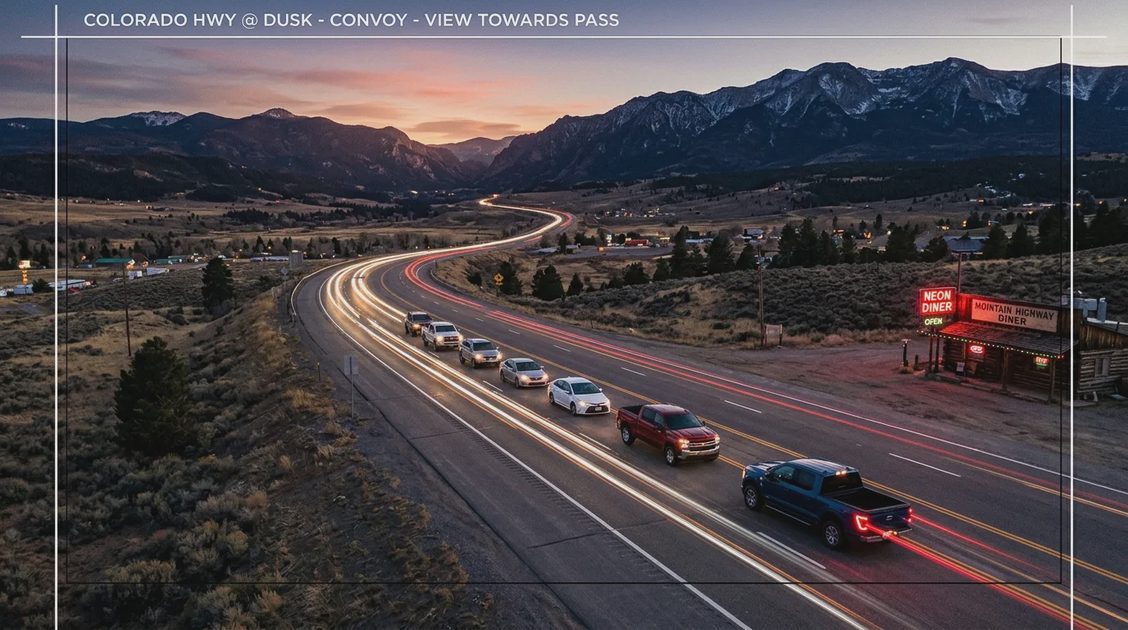
I spent part of last autumn looping from Denver through the San Juans and out toward the Utah border in a sequence of press cars that included a new Silverado, an F-150 hybrid, and a loaded RAV4 Hybrid. The trucks felt like the American road itself—commanding, capable of swallowing a weekend’s worth of camping gear and still towing the boat. The RAV4 felt like the road most people actually drive: quiet, efficient, unpretentious, and somehow always ready for the next two hundred miles without a second thought about the fuel gauge.
That difference is more than subjective. It shows up in the residual-value conversations at the diner counter and in the insurance quotes that land in inboxes. Toyota’s long reputation for durability has become a financial asset in an era of higher interest rates and longer loan terms. Detroit’s trucks still command fierce loyalty among tradespeople and rural drivers, but the broader suburban and urban buyer who once defaulted to a domestic midsize has options that feel lower-risk.
The sensory cues stick with you. The soft whir of a hybrid system at low speeds. The solid thunk of a truck door. The way late-afternoon light hits a sea of silver and white crossovers in a mountain-town parking lot and you realize half of them carry the same badge. These are the small observations that accumulate into market data.
Stellantis, Ford, and the Broader Detroit Picture
Stellantis’s struggles are not solely about product; they reflect deeper questions of brand coherence and investment prioritization after years of merger complexity. Jeep still carries cultural weight, Ram has shown recent strength in some quarters, yet overall volume has not kept pace. Ford’s hybrid push and the enduring F-Series give it more resilience, but the company is still navigating the same structural tilt toward efficiency that favors Toyota’s portfolio. GM remains the volume leader for now, protected by its truck and full-size SUV fortress, yet the walls are being tested from the flanks.
None of this means Detroit is finished. The profit math of a well-equipped Silverado or F-150 still dwarfs that of a base hybrid crossover. Fleet business, commercial demand, and the pure capability segment remain strongholds. What has changed is the ceiling on total share. When Asian brands can claim more than half the market in a given quarter, the old “Big Three” framing starts to feel historical rather than current.
Looking Ahead: Pressure Points and Possible Responses
The next chapters will be written in product cycles and capital allocation. GM needs credible hybrid volume in the segments where buyers are actually shopping, not only high-margin trucks. Ford’s early hybrid work on the Maverick and F-150 is a start; expanding that approach across more nameplates would help. Stellantis faces the steeper climb of restoring relevance across a wider range of vehicles while managing global pressures.
Toyota, for its part, is not standing still. Continued hybrid refinement, new truck and SUV entries, and the slow but steady addition of pure electrics keep the pressure on. Analysts have already floated the possibility that Toyota could challenge or even overtake GM for the annual sales crown in a year when the trends fully align—something that has happened only once in modern history, during the 2021 chip-shortage anomaly.
For the rest of us who live on the roads between these numbers, the practical takeaway is simpler. The vehicles that win long-term are the ones that solve the daily equation of cost, capability, and confidence. A truck that tows the camper and still returns respectable economy. A crossover that shrugs off mountain grades without draining the wallet. A powertrain that does not require a leap of faith every time the fuel light comes on.
I still prefer the feel of a well-sorted project car on an empty stretch of pavement—the kind of machine that rewards attention and carries the scars of previous trips. Yet when the road stretches past five hundred miles and the weather turns, the quiet competence of a modern hybrid starts to look like its own form of freedom. Detroit still builds machines that can conquer almost any task. The question now is whether it can also build the ones that most people actually want to live with every day.
The horizon is still wide. The light still hits the mountains the same way. Only the mix of badges in the rearview mirror is changing, and it is changing faster than many expected.