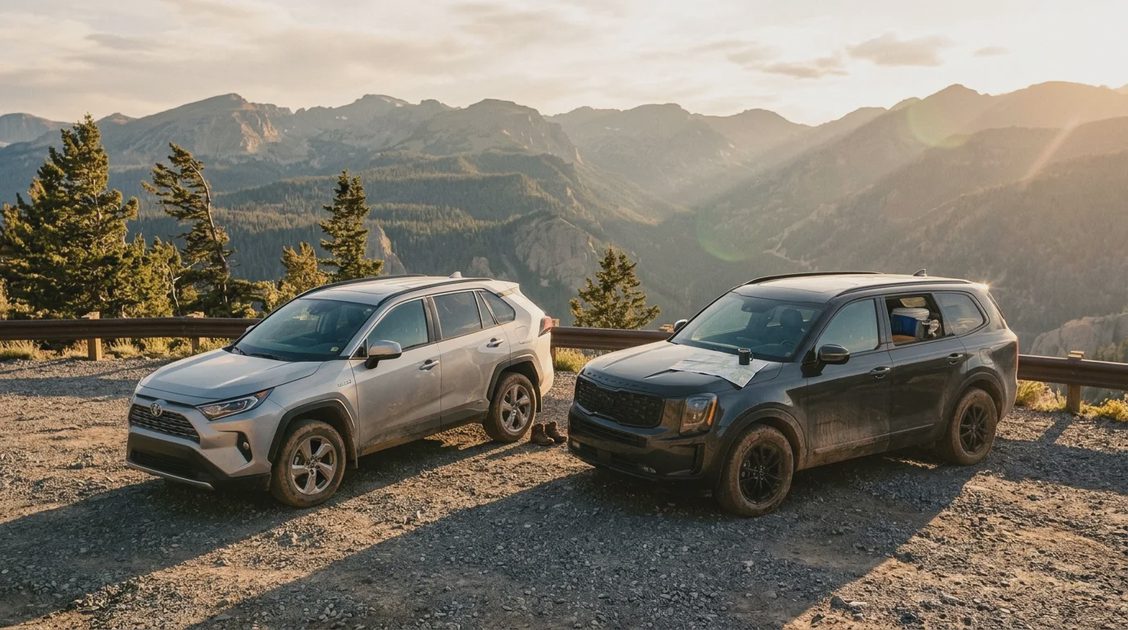
The numbers landed the way a long-distance driver notices the fuel gauge finally ticking upward after a stretch of headwinds. Toyota Motor North America reported October U.S. sales of 221,507 vehicles, a 6.5 percent increase from the same month a year earlier. The Toyota division itself rose 5.7 percent while Lexus jumped roughly 12 percent. More telling than the headline total was the composition: electrified vehicles—mostly conventional hybrids—surged about 35 percent to 126,054 units and accounted for roughly 57 percent of the company’s volume. Gas-only models continued to slide.
Hyundai and Kia arrived with their own clean records. Hyundai moved 73,452 vehicles, up about 5 percent and its best October on record, with hybrids climbing 20 percent and representing 29 percent of sales. Kia delivered 80,008 units, a 16 percent jump that marked both a record October and the brand’s sixth consecutive month of record sales. Kia’s hybrid volume more than doubled. The two Korean brands together cleared 150,000 units for the month, a combined gain north of 10 percent.
These are not abstract spreadsheets. They are the sound of tires on wet asphalt outside a dealership at dusk, the quiet whir of a hybrid system taking over in traffic, the particular satisfaction of watching the average miles-per-gallon number climb on a long Interstate run. In a market still digesting high interest rates, elevated transaction prices, and the uneven reality of pure-electric infrastructure, the hybrid has become the pragmatic protagonist.
The Hybrid Engine That Keeps Running
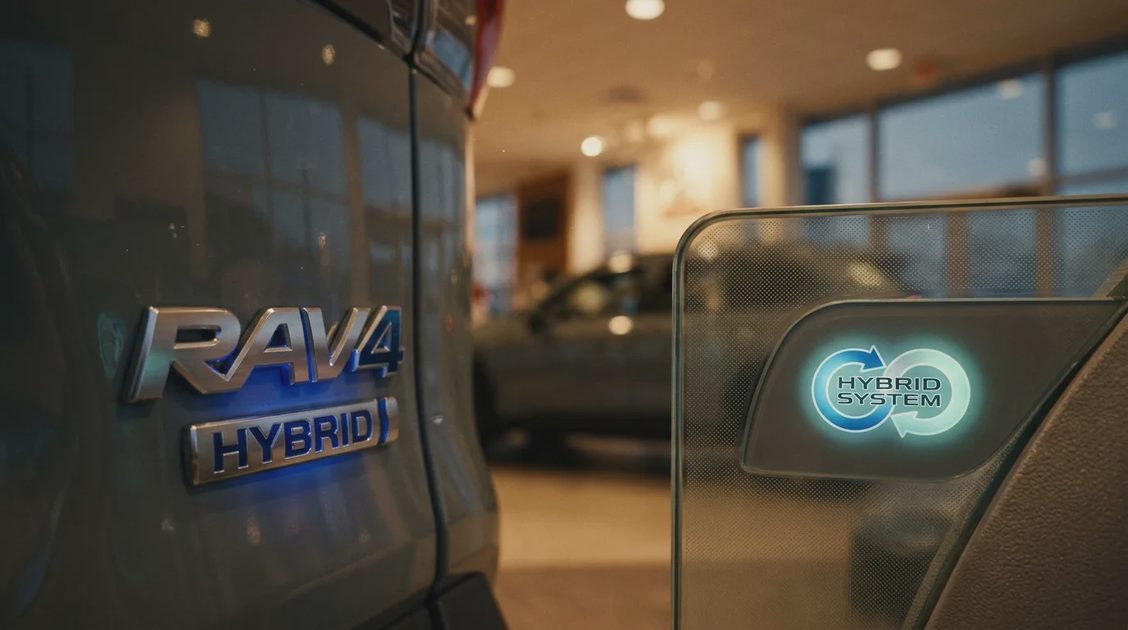
Walk any Toyota lot this fall and the pattern is obvious. The RAV4, long the brand’s volume king, is now offered exclusively with electrified powertrains in its latest generation. After months of constrained supply while production ramped across plants in Canada, Japan, and the United States, availability improved enough for the model to post a modest 0.6 percent gain to nearly 40,000 units. That single nameplate, now almost entirely hybrid, once again led Toyota’s chart. Grand Highlander, Sienna, and several other crossovers also contributed solid gains. The pure-gas Tundra still found buyers in certain regions, but the broader trend was unmistakable: customers are choosing the powertrain that delivers better efficiency without requiring a new refueling ritual.
Lexus followed the same script. Its October volume climbed on the strength of larger crossovers and SUVs that pair refinement with hybrid systems. The brand’s ability to post double-digit growth while the overall market hovered around a 3 percent increase suggests that buyers who can stretch for a luxury badge are still willing to pay for the combination of quiet operation, residual value, and real-world economy.
What makes the Toyota story cinematic is the long arc. For years the company was criticized for moving too slowly on battery-electric vehicles. While competitors raced to put pure EVs in showrooms, Toyota kept refining the hybrid systems it had been building since the original Prius. The payoff is visible now. In a month when pure-EV demand remained soft without the full weight of previous federal incentives, Toyota’s electrified mix hit levels that many pure-EV specialists would envy. The company did not abandon battery-electric development; it simply refused to bet the entire fleet on a technology whose infrastructure and price curve still lag for many American drivers.
I have driven enough RAV4 Hybrids across the Front Range and into the high desert to know the sensation. You leave Denver with a full tank, climb toward the Continental Divide, and the system decides when the electric motor can shoulder more of the load. There is no range anxiety, no hunting for a charger in a mountain town with spotty cellular service. There is only the quiet competence of a machine that understands the terrain better than most drivers do. That competence is selling.
Korean Momentum and the Value Proposition
Hyundai and Kia have been rewriting their American story for several years, and October 2026 felt like another chapter of acceleration. Hyundai’s Santa Fe surged more than 50 percent. The Palisade continued its steady climb. The Elantra and Kona posted solid double-digit gains. Hybrids accounted for nearly three in ten of the vehicles Hyundai sold, a record mix that reflects both rising fuel prices in certain regions and the simple arithmetic of monthly payments. A hybrid Santa Fe or Tucson delivers meaningful efficiency without the higher acquisition cost or charging constraints of a pure EV.
Kia’s performance was even more dramatic. The Telluride jumped 63 percent. The Sportage, already a volume leader, set another October record. The Carnival hybrid and several other electrified models posted three-digit percentage gains in some cases. Kia’s hybrid sales rose 114 percent. The brand also saw recovery in its EV lineup—the EV9 more than doubled and the EV6 climbed more than 50 percent—suggesting that when an electric vehicle is well executed and priced competitively, demand still exists. The new EV3, still ramping, added another data point.
What unites the Korean results is an understanding of the American buyer’s practical calculus. Many households need a three-row vehicle that can tow a small trailer, swallow luggage for a week-long road trip, and still return respectable fuel economy on the daily commute. Others want a compact crossover that feels premium without the premium badge tax. Hyundai and Kia have spent the last decade refining both the hardware and the design language. The result is a product portfolio that feels contemporary, well-equipped, and—crucially—available with the powertrain that currently matches the largest slice of the market’s needs.
Standing in a Hyundai or Kia showroom at twilight, you notice the same details that matter on a long drive: supportive seats that still feel good after four hours, clear instrument graphics that remain legible in changing light, a sense that the engineers thought about the person who will actually live with the vehicle rather than the person writing the press release. Those details compound into sales numbers.
What the Numbers Reveal About the Road Ahead
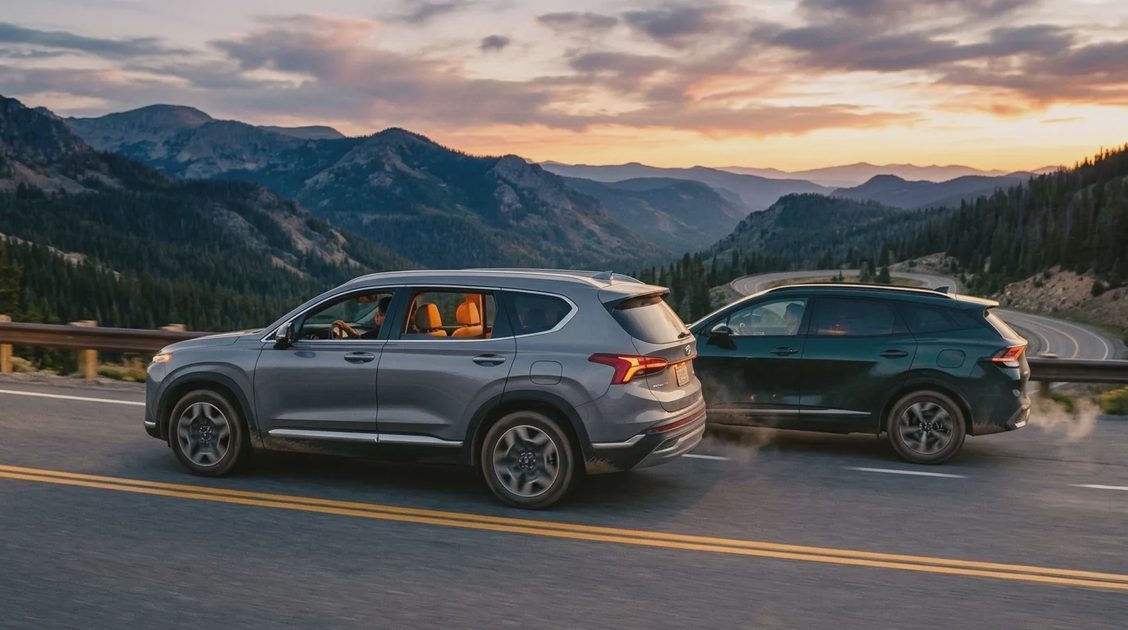
The broader U.S. light-vehicle market rose roughly 3 percent in October, with light trucks continuing to carry the majority of volume. Passenger-car sales remained essentially flat to slightly down. Fleet activity provided some lift, but the retail story belonged to hybrids and well-positioned crossovers. Japanese and Korean brands that offered strong hybrid lineups gained share; some domestic manufacturers that leaned more heavily on pure internal-combustion or pure-electric strategies saw softer results.
This is not a temporary blip. Conventional hybrids now represent a growing share of total industry volume—something on the order of 15–16 percent year-to-date in recent tallies, up several points from the prior year. Plug-in hybrids remain a smaller slice. Pure battery-electric vehicles continue to face the twin headwinds of higher average transaction prices and incomplete public charging infrastructure outside major metro areas. The hybrid occupies the middle ground that most buyers currently inhabit: better efficiency, familiar refueling, proven reliability, and residual values that still look healthy.
From a road-tripper’s perspective the shift feels inevitable. I have watched the dashboard of a hybrid Camry or RAV4 settle into the mid-40s mpg on a long, steady Interstate run while a comparable gas-only vehicle would have been closer to the low 30s. Over a 2,000-mile loop that difference is not abstract; it is fewer fuel stops, less time standing at a pump in the wind, more time watching the light change across open country. Multiply that experience across hundreds of thousands of buyers and the sales charts begin to make sense.
Toyota’s ability to lean on its hybrid depth while continuing to develop battery-electric models gives it a structural advantage in the current environment. Hyundai and Kia have closed the gap on product quality and design while expanding their own hybrid and EV offerings at a rapid clip. Both strategies are working. The brands that treat electrification as a spectrum rather than a binary switch are the ones posting the cleanest October numbers.
There are still open questions. How quickly will pure-EV costs fall? How quickly will public charging become reliable enough for the average cross-country traveler? Will new federal or state incentives reappear, and in what form? Those answers will shape the next five years. For the moment, however, the market has spoken with unusual clarity. Buyers want efficiency they can use every day, in every climate, without rewriting their entire relationship to energy.
The October numbers are more than a monthly scorecard. They are a snapshot of a transition that is happening in real time, one hybrid system at a time, one quiet handoff between electric motor and gasoline engine, one long stretch of highway where the fuel gauge stays higher for longer. Toyota, Hyundai, and Kia are simply the manufacturers that arrived prepared for the scene that is currently being shot.
The road continues. The light is still good. And the vehicles that understand both the destination and the journey are the ones filling the frame.