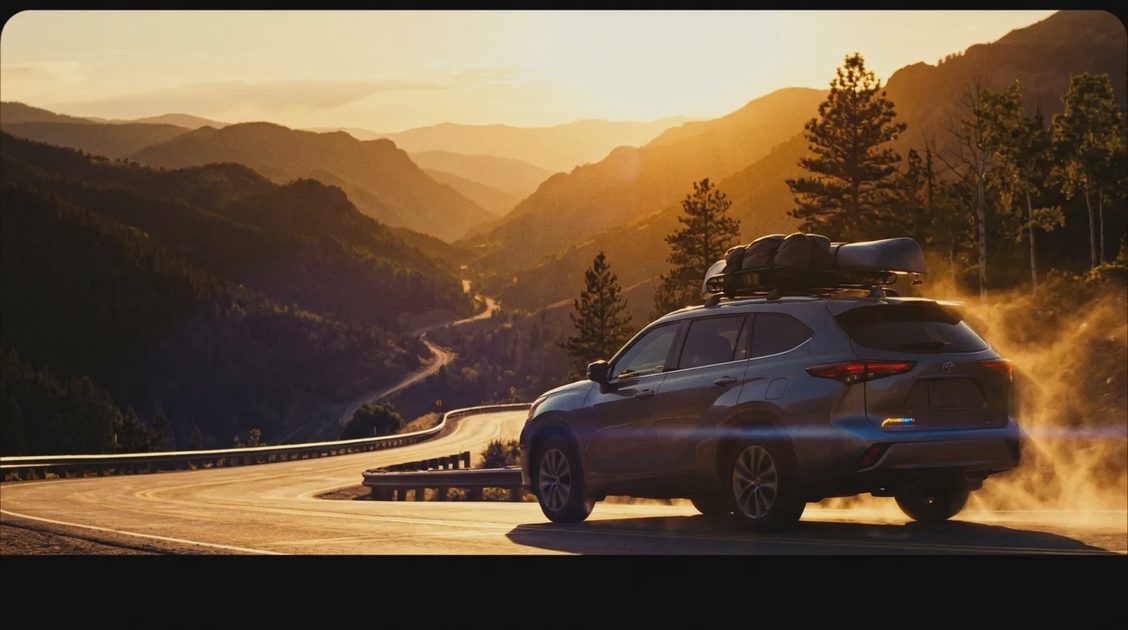
The news hit like the first cold front sliding down the Front Range in late October. Reuters reported that General Motors plans hybrid versions of its strongest-selling three-row SUVs—the Chevrolet Traverse, Buick Enclave, and GMC Acadia—built at the Lansing Delta Township plant in Michigan.
GM itself confirmed the plant is being prepared for hybrid production and that broader Lansing-area investments will exceed $2 billion over the next several years, including substantial funding earmarked for the Delta Township facility. Specific model timing and powertrain details remain under wraps, but the sources are clear enough: the company that once treated hybrids as an interim technology it could leapfrog is now adding them where the volume and the customer complaints are loudest.
I read the reports while sitting in a rented Traverse on the shoulder of I-70 west of Denver, engine ticking as it cooled, the smell of pine and asphalt still clinging to the cabin. The kind of moment that makes the strategy shift feel personal. These are the vehicles people actually take on the long hauls—soccer tournaments, ski weekends, multi-generational road trips—where pure EV range anxiety still bites harder than any marketing slide admits.
Why the Pivot Arrived Now
For years GM bet the future almost entirely on battery-electric vehicles. The company built one of the broadest EV lineups in the United States and largely left conventional hybrids to Toyota, Honda, and the Korean brands. The only hybrid it sold in meaningful numbers here was the low-volume Corvette E-Ray. Dealers noticed. Customers noticed. Market share slipped to 16.6 percent in the first nine months of 2026 from 17.4 percent a year earlier while hybrid specialists gained ground.
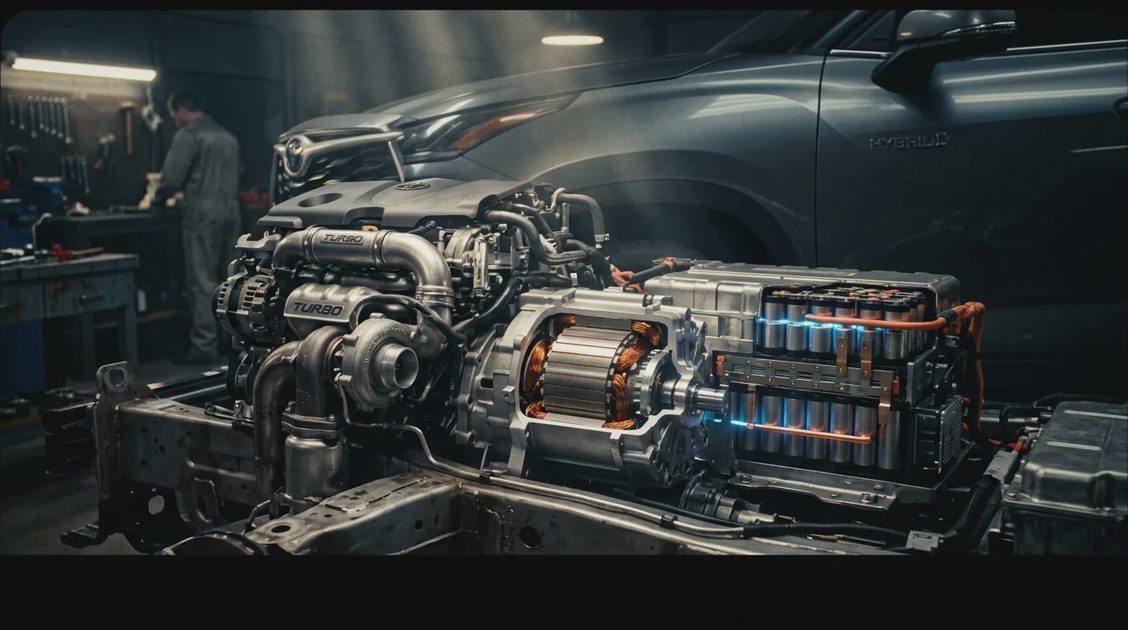
CEO Mary Barra told analysts on the recent earnings call that hybrids would appear in multiple segments and that the company would not need additional capital expenditure or engineering resources to bring them. “We’ll talk more about them as we get closer to the launch,” she said. The message was pragmatic rather than visionary. Shoppers facing higher fuel prices and still-patchy charging networks have been voting with their wallets for hybrids. GM finally heard the vote.
The three vehicles in question share the same platform and the same turbocharged 2.5-liter four-cylinder. They are among GM’s highest-volume family haulers. Putting a hybrid system under those hoods is the fastest way to close the efficiency gap without waiting for the next generation of cheaper batteries or denser charging corridors. Reports suggest both conventional hybrids and plug-in hybrids are under development, with the first PHEVs possibly arriving late next year or in early 2028.
I have driven enough of these big crossovers to know where the pain points sit. On a long interstate run the current 23 mpg combined figures feel adequate until the third refueling stop of the day. A well-executed hybrid system—especially one that can still tow and still climb mountain grades without drama—would change the ownership math for a lot of families who simply do not want to plan every trip around a charger.
The Plant and the Money
Lansing Delta Township already builds the Traverse, Enclave, and Acadia. In 2025 the plant hit a record of more than 291,000 vehicles. Preparing it for hybrid production is less about starting from scratch and more about adding battery and electric-motor assembly capability to an existing high-volume line. The investment numbers floating around—$1.25 billion at the plant itself, part of a larger $2 billion-plus regional commitment—signal seriousness.
Some reports mention a $750 million figure specifically tied to hybrid tooling. Whatever the final accounting, the money is moving. That matters in a manufacturing landscape still unsettled by tariffs and supply-chain recalibration.
Trade Winds and Tariff Shadows
The hybrid announcement did not arrive in a vacuum. Trade and tariff risks have been climbing for months. GM has already absorbed billions in tariff-related costs and continues to navigate shifting rules on vehicles and parts moving across the U.S., Canadian, and Mexican borders. Potential further increases—including talk of higher duties on Canadian goods—add another layer of uncertainty for any company whose supply chain still stretches across North America.
Chinese competition remains a longer-term shadow even if direct vehicle imports face high barriers. Global manufacturers are treating the U.S. market as a relative safe harbor, which only intensifies the pressure on domestic players to offer competitive powertrain choices. A hybrid Traverse that can deliver meaningful fuel savings without forcing buyers into the pure-EV ecosystem is one way to keep volume and margin at home while the policy landscape settles.
From the driver’s seat the abstract numbers become concrete. Every time I watch the fuel gauge drop faster than expected on a mountain grade, or calculate the cost of a cross-country family trip, the absence of a hybrid option has felt like a missing gear. GM is now installing that gear.

What the Hybrid Might Feel Like
Technical details are still sparse. The existing 2.5-liter turbo will almost certainly form the gasoline half of the system. Expect an electric motor (or motors) providing low-speed torque fill, regenerative braking, and the ability to run on electric power alone for short distances in the case of a plug-in version. The packaging challenge inside a three-row SUV is real—battery space cannot steal cargo volume or third-row room if the vehicle is to remain competitive.
I keep thinking about the sensory side of it. The quiet glide out of a trailhead parking lot at dawn, electric motors doing the early work before the engine wakes. The way the power delivery could feel more linear on a long interstate climb. The reduced vibration and lower cabin noise that good hybrid systems bring. These are the details that turn a family hauler into something you actually look forward to driving for eight hours straight.
For road-trippers and photographers who live out of their vehicles the way I do, the practical upside is obvious. More range between stops means more time shooting light instead of hunting fuel stations. Lower operating costs mean the budget stretches farther when the trip turns into an unexpected two-week loop through the Rockies or the Southwest.
The Bigger Picture for GM and the Segment
This is not a full retreat from electric vehicles. GM still has a substantial EV lineup and continues to talk about longer-term battery cost reductions. But the hybrid move acknowledges that the transition is messier and slower than the early roadmaps assumed. Customers who need three rows, towing capacity, and the ability to drive deep into areas where chargers are still rare were never going to be the early adopters. Giving them a hybrid option keeps them in the GM family instead of watching them walk to a Toyota Highlander Hybrid or a Kia Sorento Hybrid.
Competitors already own the hybrid conversation in the midsize three-row space. Toyota, Hyundai, Kia, and others have been delivering real-world efficiency numbers that make the current Traverse, Enclave, and Acadia look ordinary. Closing that gap matters for residual values, fleet sales, and the simple daily math of family ownership.
I expect the first hybrid variants to arrive as 2028 or 2029 models at the earliest, though some reports leave open the possibility of earlier plug-in versions. Pricing will be critical. If the hybrid premium is modest and the fuel savings tangible, these vehicles could regain lost volume quickly. If the systems feel compromised or the cost jumps too high, the opportunity narrows.
Sitting in that rented Traverse on the side of the highway, I found myself already imagining the next version. Same roomy cabin, same commanding view of the road, but with a powertrain that no longer forces the same trade-offs. The kind of vehicle that disappears into the background of a long drive the way the best road-trip tools do—reliable, efficient, and ready for whatever the map throws at you next.
GM’s hybrid shortfall was never just about technology. It was about listening. The company is finally listening. The three-row SUVs that carry so many of us across this continent are about to get a quieter, more efficient heartbeat. For anyone who measures life in miles driven rather than charging sessions planned, that is welcome news.
The road still stretches out ahead—mountain passes, desert nights, the low hum of tires on asphalt. Soon there may be one more practical, capable tool for covering those miles without the old compromises. That feels like progress worth noting.