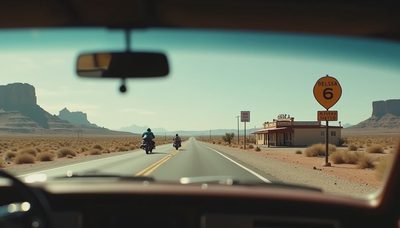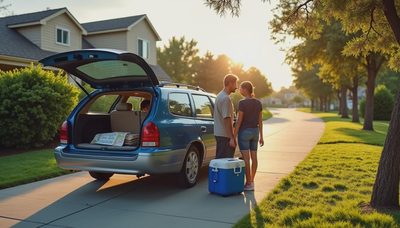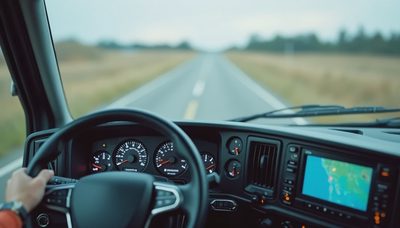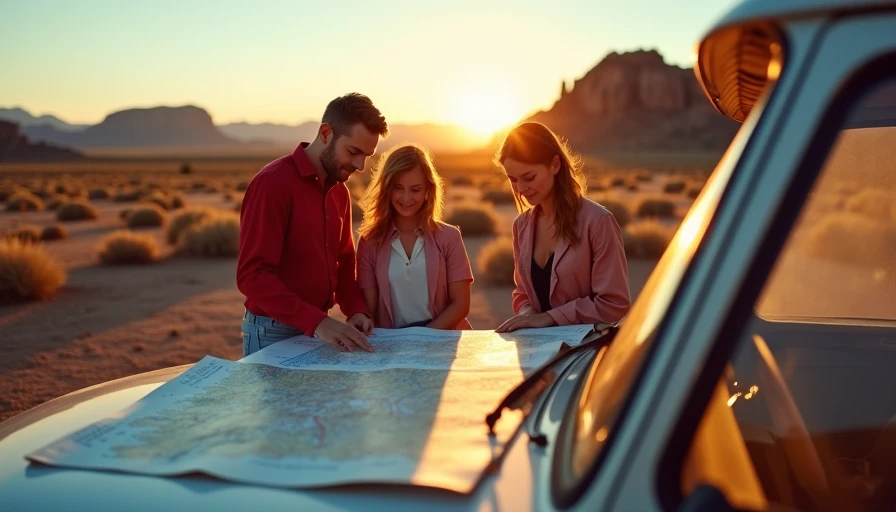
There's a moment on every great drive when the windshield becomes a screen and the world outside feels scripted for you. I've had it on Interstate 90 in South Dakota, at the turn where the Badlands suddenly appear, and on a two-lane cut through the California desert where the only smell is sagebrush and creosote. What got me there wasn't luck. It was an American road trip planner I've refined over years of writing for travel and automotive outlets. Here's the version I use now, with the details that make the difference between a trip you survive and a trip you tell stories about for years.
Start With the Right Vehicle, Not the Right Route
The detail that made the trip: the car matters more than the itinerary. A rental SUV with adaptive cruise control changes how far you can drive before your right foot cramps. A sedan with low-profile tires will punish you on gravel. My 2019 Subaru Outback has handled the Pacific Coast Highway, Utah's Moki Dugway, and a muddy back road in Vermont, and the clearance has saved me more than once. If you're renting, budget for all-wheel drive if you're going near mountains. A Nissan Rogue or Toyota RAV4 will get you there; a Ford Bronco Sport makes the getting there feel like an event. Whatever you choose, sit in it for twenty minutes before you commit. Comfort isn't a luxury on a long drive; it's a safety feature.
Build a Route That Breathes
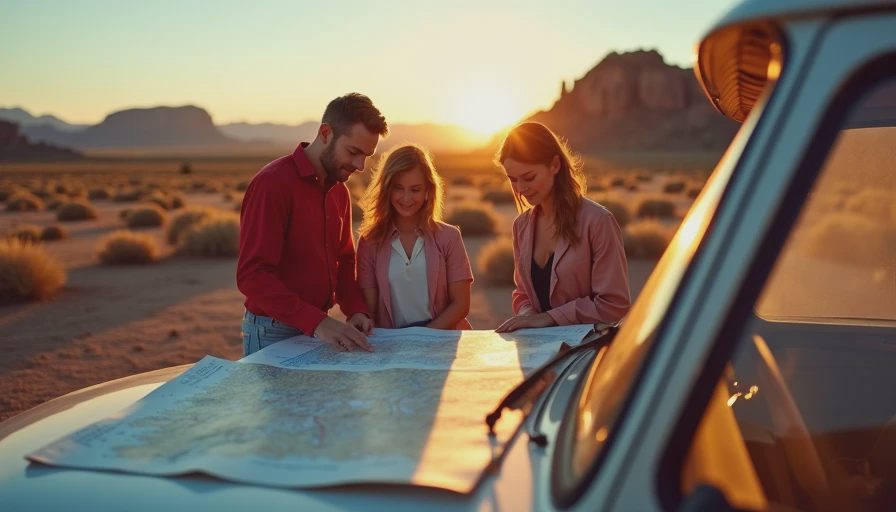
Skip the obvious thing: do not map your trip to the exact mile. The American road trip planner I trust most leaves at least one buffer day for every five on the road. That's the day you pull off for a county fair, a roadside pie stand, or a trail you spot from the map. Planning apps like Roadtrippers and AAA's TripTik help you find the routes, but the best tool is a paper map and a highlighter. I mark every national park, every scenic byway, and then I draw my line with extra curves. A direct route from Chicago to Yellowstone is about 900 miles; the scenic route through the Badlands adds two hours and a lifetime of memory. The buffer day is what lets you take it.
Food Stops Are the Real Mile Markers
A road trip is a food trip with driving in between. I keep a running list of diners, taquerias, and regional specialties sorted by state. In Texas, it's barbecue — I wait in line at places where the smoke hits you before the door does. In New Mexico, it's green chile cheeseburgers. In Wisconsin, it's Friday fish fry. You don't need a food critic; you need a strategy. Ask bartenders where they'd eat on their day off. Avoid the restaurant with the laminated menu and a bus parked outside. And always stop at the small-town bakery for pie, not the gas station chain. The American road trip planner that remembers food is the one you'll want to repeat.
The Electric Road Trip Planner
If you're driving an electric vehicle, the planning changes but the adventure doesn't. The American road trip planner for an EV is all about charging stops. Apps like PlugShare and A Better Routeplanner let you map the route by charger availability rather than miles. My rule of thumb: plan for a 20-30 minute fast-charge stop every two or three hours, and make those stops at places worth visiting — a brewery with outdoor seating, a diner with good coffee, a town square with a bookstore. With a Tesla, the Supercharger network is your safety net; with a CCS-equipped car like a Ford Mustang Mach-E or Hyundai Ioniq 5, you'll want to check charger reliability before you go. It's more thought, but the payoff is a quieter, cheaper ride.

The Apps I Actually Open on a Road Trip
Beyond the mapping apps, I keep a short list of tools that earn their place on the dashboard. Google Maps is fine for traffic, but for scenery I use Roadtrippers to find roadside attractions along a corridor. For camping, Recreation.gov and Hipcamp handle reservations. For food, I use Yelp only as a tiebreaker and Google Maps reviews for recency — I always filter by "newest." And for fuel, GasBuddy or the phone's built-in fuel app keeps the tank full without wandering off route. Each app has a job, and none of them require a subscription, which is exactly how I like it.
Pack the Car Like You Mean It
Overpacking is the enemy of a good road trip. I travel with one duffel and a cooler, and I dress in layers. Here's the list I've refined after two dozen drives: a paper atlas, a phone mount, a cable that reaches the back seat, a tire pressure gauge, a flashlight, a roll of paper towels, and a small tool kit. National parks require some prep — book timed entry passes the moment your dates are set, and reserve campsites the day the window opens. Keep valuables in the trunk before you park, not after. The American road trip planner is half about the route and half about the routine inside the car. Get that right, and the trip starts feeling easy by day two.
A Simple Week-by-Week Planning Checklist
If you're six weeks out, start with the big pins: park reservations, hotel nights, and event tickets. Four weeks out, make your restaurant list and book the one you'd regret missing. Two weeks out, service the car — check oil, tires, wipers, and washer fluid, and confirm your insurance card is in the glovebox. One week out, download offline maps, load your audiobook queue, and wash the windshield before you go. The day before, pack the cooler, fill the tank, and leave with a loose plan and a hard dinner reservation for the first night. That combination — structure at the edges, spontaneity in the middle — is what makes a road trip feel like an adventure instead of a checklist.