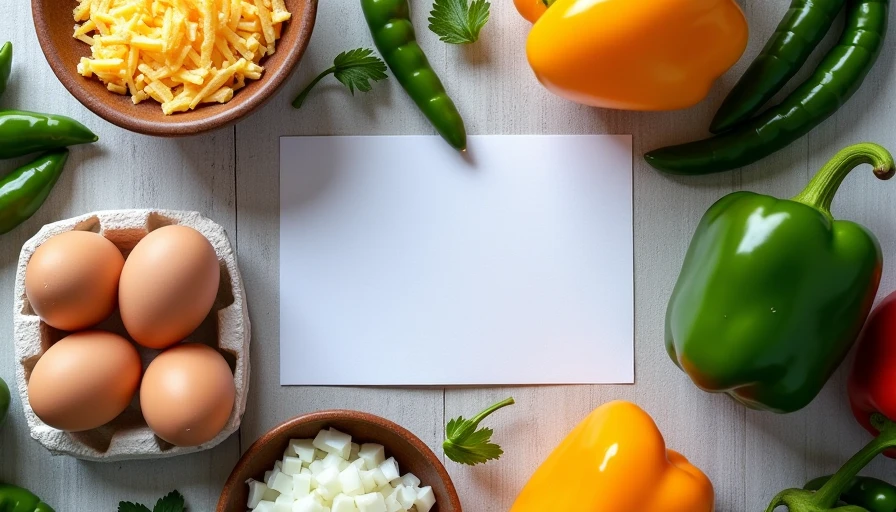
The first thing you smell is butter foaming in the skillet, followed by roasted peppers and warm cumin. That is the promise of southwest omelette ingredients: a short list that turns ordinary eggs into something colorful, filling, and generous enough for a slow Sunday or a breakfast before a long drive. I like this omelette best when the vegetables stay distinct rather than disappearing into a heavy filling. You should taste the sweet corn, the fresh bite of scallion, and the gentle heat of a green chile in every forkful.
The essential southwest omelette ingredients
For two substantial omelettes, start with six large eggs, two tablespoons of whole milk or water, one tablespoon of butter, and one tablespoon of olive oil. The oil raises the butter's smoke point slightly, while the butter supplies the flavor and soft texture that make diner-style eggs so appealing.
The vegetable base should include half a red bell pepper, half a poblano pepper, two scallions, and one-third cup of corn. Fresh corn is wonderful in summer, but frozen corn works beautifully after a quick thaw. For heat, use one small jalapeño, minced finely, or substitute a few tablespoons of canned green chiles for a softer, more even warmth.
Cheese is where the omelette becomes breakfast rather than a vegetable scramble. Monterey Jack melts smoothly and keeps the flavor mild; sharp cheddar gives the dish more contrast. Pepper Jack is useful when you want heat without adding another chile. Plan on one-half cup of shredded cheese total. The best southwest omelette ingredients leave room for texture, so do not bury the vegetables under a thick blanket of dairy.
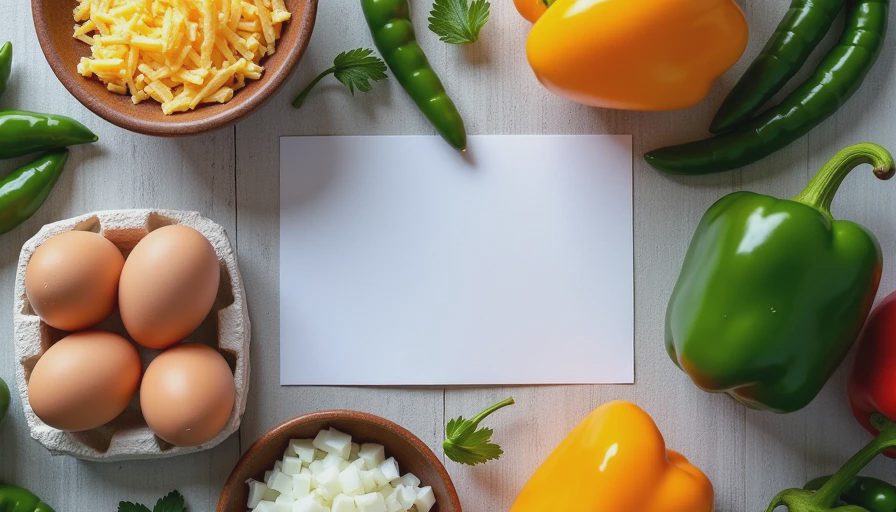
For the finish, set out avocado, cilantro, lime, and salsa. A few avocado slices add cool richness, while lime juice keeps the filling from feeling heavy. Choose a salsa with enough acidity to wake up the eggs. A roasted tomato salsa brings depth, and a tomatillo salsa gives the plate a greener, sharper edge. Sour cream is optional, but a small spoonful can be welcome if you have used a particularly hot pepper.
How to prep the filling without making watery eggs
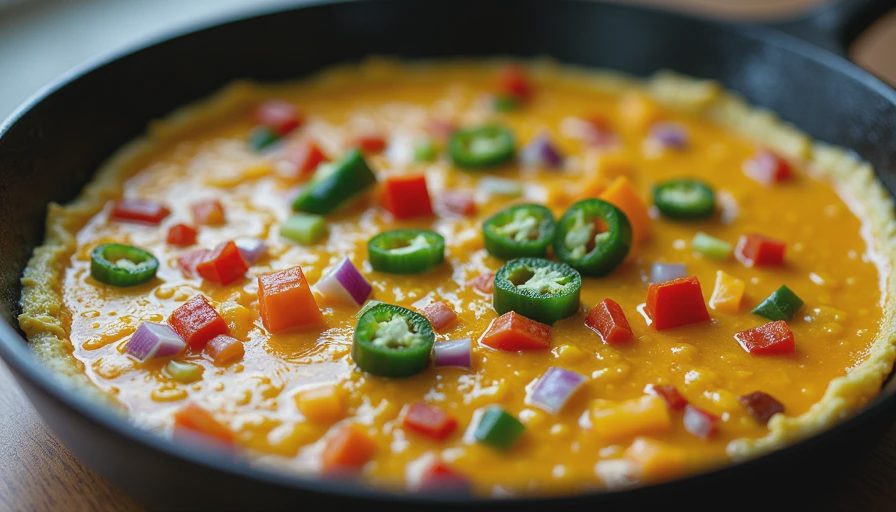
The most important cooking step happens before the eggs hit the pan. Heat a ten-inch nonstick skillet over medium heat, add the oil and butter, then cook the bell pepper and poblano for three to four minutes. Add the jalapeño, scallions, and corn only after the firmer peppers have softened. Stir for another two minutes, until the corn is hot and any excess moisture has cooked away.
Season the vegetables with a pinch of kosher salt, a little black pepper, and one-quarter teaspoon of ground cumin. Smoked paprika is also good, especially if you are cooking indoors and want a subtle grilled note. Avoid adding salsa to the pan at this stage. Its liquid can make the eggs loose, and the fresh flavor is better as a topping.
This is the point where southwest omelette ingredients can go in two directions. For a breakfast with a clean, fresh profile, keep the filling lightly cooked and brightly seasoned. For a roadside-diner mood, let the peppers take on a few browned edges and add a tablespoon of chopped roasted green chile. Either approach works, but the filling should be warm and fairly dry before assembly.
The low-and-slow egg technique
Whisk three eggs with one tablespoon of milk or water until the whites disappear. Do not beat aggressively; too much air creates a puffy omelette that deflates quickly. Wipe out the skillet if vegetable pieces have stuck, return it to low-medium heat, and add half the butter-oil mixture.
Pour in the eggs and wait about ten seconds. Use a silicone spatula to draw the set edges toward the center while tilting the pan so uncooked egg flows into the open spaces. Continue for roughly one minute. When the top is still slightly glossy but no longer liquid, stop stirring. The residual heat will finish the center without turning it rubbery.
Scatter half the vegetables and cheese across one side, then fold the empty half over the filling. Slide the omelette onto a warm plate and repeat. This method keeps southwest omelette ingredients tucked into a tender egg envelope instead of mixing everything into a dry scramble.
Smart substitutions for different mornings
A well-stocked kitchen is not required. If you are cooking from a vacation rental or a small cabin kitchen, use jarred roasted red peppers, frozen corn, and pre-shredded cheese. Those shortcuts reduce chopping without changing the character of the meal. Black beans are another useful addition: drain and rinse one-half cup, warm them with the vegetables, and use a little less cheese so the filling does not become too dense.
For a lighter plate, replace half the cheese with diced avocado added after cooking. For more protein, add two ounces of chopped cooked chicken or turkey, warmed with the peppers. Chorizo can work too, but brown it separately and drain it before adding the vegetables; otherwise its rendered fat can overwhelm the eggs.
If you are feeding children, leave the jalapeño out and offer salsa at the table. Adults can add pickled onions, hot sauce, or crushed tortilla chips for contrast. The core southwest omelette ingredients remain flexible because the eggs, peppers, corn, cheese, and lime provide a dependable foundation.
Serving it like a destination breakfast
Serve the omelette immediately with warm tortillas, sliced fruit, or crisp potatoes. I like a small side of grapefruit or oranges because the citrus makes the cheese and avocado taste brighter. Coffee is the obvious companion, but a cold glass of sparkling water with lime is excellent after a warm night or before a morning departure.
This is also a practical road-trip breakfast when prepared thoughtfully. Cook the vegetable filling the night before, cool it promptly, and refrigerate it in a sealed container. In the morning, reheat only what you need and cook fresh eggs. Pack salsa and avocado separately so the tortillas or omelette do not become soggy. The filling keeps its texture for about three days when refrigerated, making it useful for a weekend away without resorting to fast food.
The detail that made this breakfast memorable for me was not a special spice. It was the contrast between a hot, tender center and the cool avocado added at the last second. That small finish gives southwest omelette ingredients the same quality I look for in a good travel meal: familiar components, a clear sense of place, and just enough freshness to make you pause before the next mile.
A simple formula worth remembering
Use three eggs per person, about one cup of cooked vegetables for two omelettes, and one-quarter cup of shredded cheese per serving. Cook watery ingredients first, season in layers, and keep the eggs on low heat. Finish with something fresh, such as lime, cilantro, avocado, or salsa.
Once you know that formula, southwest omelette ingredients become easy to adapt around whatever is in the refrigerator. Add beans for substance, corn for sweetness, chiles for warmth, or leftover grilled vegetables for a smoky note. Start with good heat control rather than a complicated recipe, and you will have a breakfast that feels composed without being fussy. A year later, what I still think about is that first buttery aroma—and how quickly a quiet kitchen can feel like the beginning of a trip.