With the world economy in turmoil, Americans may be wondering where they can go to stretch their dollars the furthest. The strength of the U.S. dollar fluctuates and can be volatile. However, in many parts of the world, “the U.S. dollar can purchase much better experiences and goods for a fraction of what the U.S. dollar can buy in the U.S.,” explains Daniel Herszberg, an international attorney and co-founder of Travel Insighter who has visited every country in the world. That’s especially true in countries where the dollar has a favorable exchange rate against the local currency.
However, a strong dollar isn’t just about low prices abroad. “It’s also about the richness of the experience relative to cost,” Herszberg says. “Simply put, you can do better and more of everything, better food, better experiences. Travelers can stay longer and in nicer accommodations than they otherwise would.” That means travelers can engage more deeply with a destination and ultimately have a better trip, he says.
Here are 12 places around the world where you can stretch your American dollars the furthest.
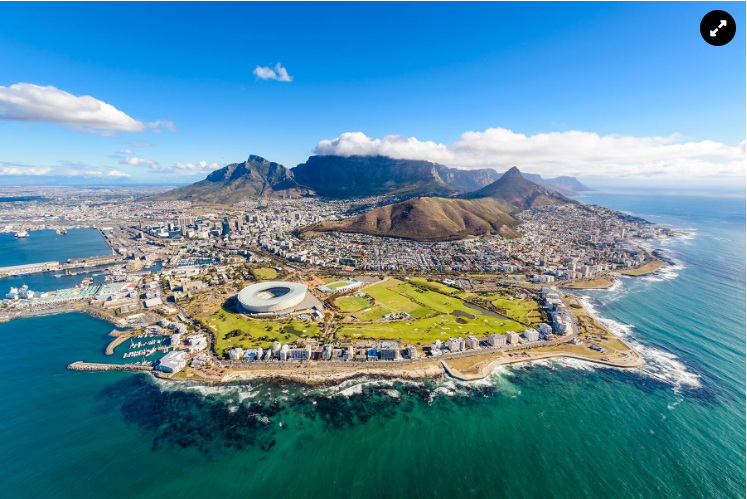
South Africa has always been a relatively inexpensive place for Americans to visit, Herszberg says. However, the South African rand is currently at its near-lowest point against the U.S. dollar. “This is absolutely the right time to book a trip to Cape Town,” Herszberg recommends. “In South Africa, travelers will be able to stay in much higher-tier, design-forward hotels for far less than you’d expect to pay.” Or, consider booking a malaria-free safari to South Africa instead.
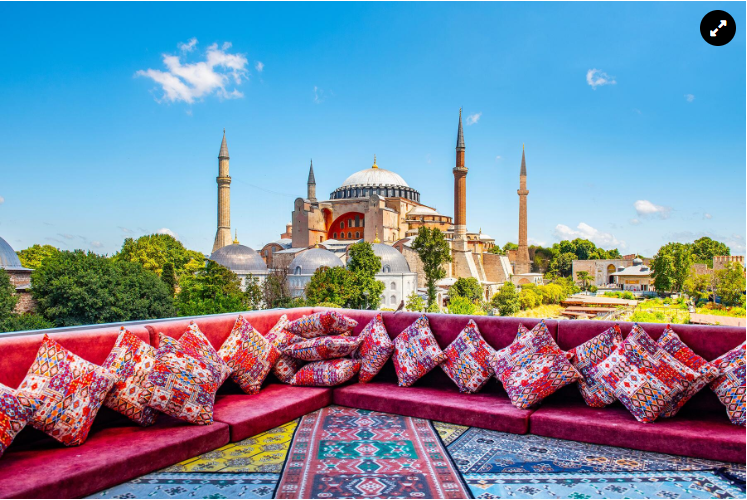
Turkey (or Türkiye) “offers exceptional value at the moment,” Herszberg says. The U.S. dollar goes far throughout the country. “You can have some incredibly good meals in Istanbul for less than half what you’d expect to pay for the same in New York,” he explains. Thanks to a favorable exchange rate, Americans may find resorts in the Turkish Riviera along the Mediterranean and Aegean seas more affordable than those in the French Riviera or along the Amalfi Coast. Moreover, with current exchange rates, Turkey “provides European-quality infra-services with plenty of Eastern culture at a much lower cost than Western Europe,” explains Tom Abraham, founder of the World Travel Index, a resource that provides data-led travel insight.
Japan used to be one of the most expensive countries in the world for Americans to visit. However, now “Japan must be the American tourist’s safest bet today,” Abraham says. That’s because the American currency is at its multi-decade high against the yen, he explains. “A trip there is cheaper than it has been for more than one generation,” and likely to be less expensive than a trip to Western Europe, given current exchange rates, Abraham explains. That means it’s a great time to experience the bustling energy of Tokyo, a view of Mt. Fuji, and a traditional Japanese onsen.
“For Americans wanting to stretch their dollar but still visit Europe, Albania is an increasingly popular travel destination,” Kendra Guild, vice president of North America at Solos, a tour company that arranges group trips for solo travelers, explains. The U.S. dollar remains strong against the Albanian Lek. Albania is an attractive destination because it is full of diverse landscapes, including beautiful beaches along the Ionian and Adriatic Seas and rugged mountains in the Albanian Alps, she says. According to Guild, “Albania’s affordability makes it an approachable destination to enjoy the best of the Adriatic Sea at significantly lower prices than neighboring Greece without the crowds.”
Vietnam has long been a favorite for budget travelers. The U.S. dollar continues to be strong against the Vietnamese dong, making it a great destination for even those with mid-range or higher-end budgets. It’s easy to see why Vietnam continues to be popular with Americans, says Leigh Barnes, President of the Americas for Intrepid Travel, a travel company that arranges small group and tailor-made trips. “With low costs for accommodation, local food, and transport, your dollar can stretch surprisingly far there,” he explains. Plus, “It’s a well-established stop on the backpacker trail, which usually means strong infrastructure and a wealth of affordable experiences.”
Mexico, particularly Mexico City, “bursts with energy and value for travelers,” Barnes says. Although the peso has been gaining strength against the dollar, Americans can still stretch their hard-earned greenbacks in the country. Accommodations tend to be very reasonably priced. ”As for street food, it’s not only everywhere, it’s incredibly cheap and you can grab tacos for under a dollar,” Barnes says. Beyond the capital, sun-soaked towns like Playa del Carmen and Tulum also offer a good value for visiting Americans who want to visit beautiful beaches and Mayan Ruins, he says.
The U.S. dollar may be weak in parts of Europe, but it still goes far in Poland. Although Poland is part of the European Union, it still uses the Polish zloty, which is a more favorable currency for Americans. Accommodations tend to be much less expensive in Warsaw and Krakow than they are in other major European cities like Paris or London. Yet, Poland is full of historical sites, museums, beaches, small towns, big cities, and gorgeous mountains that boast beautiful hiking trails and natural hot springs, so there is something for everyone.
Due to political upheaval in Argentina, the Argentine peso has weakened against the dollar, making it a good time to visit. Argentina’s capital of Buenos Aires is sometimes called the “Paris of South America” thanks to its European-style architecture, wide boulevards, and cafe culture. Moreover, nature enthusiasts can visit Patagonia to experience diverse landscapes from mountains and glaciers to grasslands and forests, all for less than it cost to visit Argentina in previous years. Argentina can be a more affordable alternative to visiting Europe.
In the country of Georgia, “travelers can enjoy ancient winemaking traditions and dramatic landscapes such as monasteries on cliff faces, all without the high tourist density and inflated pricing,” Herszberg says. Although the Georgian lari has strengthened in recent years, the U.S. dollar still goes far.
India is full of “immense richness of culture, historical monuments like the Taj Mahal and forts, spirituality, festivals with a kaleidoscope of colors, and tremendous culinary variety,” says Abraham. Thanks to a strong U.S. dollar against the Indian rupee, India also offers a good value for American tourists. “Low accommodation, meal, and transport costs leave room in your budget to have full experiences at a minimal cost,” he explains.
The U.S. dollar is currently experiencing a very favorable exchange rate against the Australian dollar. For Americans, that means the dollar will go a long way down under, says Christopher Maggio, a spokesperson for Visit Canberra. As long as the U.S. dollar remains strong against the Australian dollar, Americans may find that they can “luxury for less” while visiting Australia’s lakes, forests, museums, and more.
Although the Indonesian rupiah has made some gains after collapsing, the U.S. dollar still goes far in Indonesia. That includes the popular island of Bali, sometimes called the “Island of the Gods.” Elsewhere in Indonesia, visitors can explore volcanoes, observe orangutans in their natural habitat, and see Komodo dragons in their natural habitat. Now is a great time for Americans to experience the country’s beaches, rice paddies, waterfalls, temples, and rich culture.