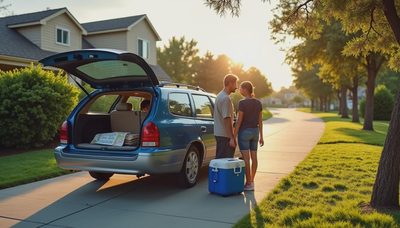
The first thing you notice on an i70 road trip is how quickly the landscape changes. One hour, you are watching grain elevators and long, level fields slide past the windshield; later, the road is climbing toward dry hills and distant, blue-gray mountains. Interstate 70 runs roughly 2,150 miles from Cove Fort, Utah, to Baltimore, Maryland, linking a remarkable cross-section of the country. It is not just a way to get somewhere. With the right pace, it becomes a string of small discoveries, good meals, and memorable driving days.
Choose your direction and daily pace
An i70 road trip works best when you resist the temptation to cover the entire route in a single push. A nonstop drive from the Baltimore area to central Utah can take more than 30 hours before meaningful breaks, traffic, construction, weather, or detours. For a more enjoyable trip, plan for five to seven driving days, with several shorter days around cities and mountain sections.
Eastbound travelers can begin among Utah's high desert landscapes, pass through Colorado's Front Range, cross the Great Plains, and finish with the denser rhythm of the Midwest and East Coast. Westbound drivers get the opposite reveal: familiar city streets gradually open into farmland, prairie, canyon country, and high mountain scenery.
I prefer scheduling two nights in one place rather than moving every evening. Denver, Kansas City, St. Louis, Indianapolis, and Columbus can all work as useful overnight anchors, depending on your start point. The detail that made the trip: leaving one afternoon unscheduled. That spare time gives you room for a slow lunch, a scenic overlook, or an unexpected main street without turning the vacation into a driving exam.
Before booking hotels, look at the total distance between fuel stops, charging stations, and your planned lodging. Rural stretches can have fewer services, particularly in western Colorado and Utah. A full tank or a high battery state of charge is a much better travel companion than optimistic arithmetic.

Build the route around worthwhile pauses
The best i70 road trip stops are not always the biggest attractions. They are places that change the temperature of the day. In Kansas, a brief walk through a small downtown or a stop for coffee can break up an exceptionally straight stretch of highway. In Missouri, St. Louis offers architecture, museums, and a useful reset before the road continues west. Kansas City is a natural pause when barbecue, jazz history, and a comfortable hotel matter as much as mileage.
Colorado brings a more dramatic shift. Denver is an easy base for a night away from the interstate, while the road west of the city becomes more demanding and scenic. The climb toward the Eisenhower-Johnson Memorial Tunnel deserves patience, especially in winter or when traffic is heavy. Keep both hands available, maintain generous following distance, and avoid treating a mountain descent like an opportunity to test the brakes.
Near the western end, Grand Junction makes a practical staging point for exploring the Colorado National Monument area, while Utah's scenery becomes increasingly expansive as you approach the route's terminus near Cove Fort. Not every stop needs a formal itinerary. Pulling over safely to photograph a changing sky can become more meaningful than rushing toward one more marked attraction.
Skip the obvious thing: do not measure the trip only by famous viewpoints. Do this instead: choose one local bakery, market, diner, or independent coffee shop in each overnight town, then ask the person behind the counter what locals order. That simple question often produces a better meal than a crowded, highly ranked destination.
Prepare the car before the first highway mile
A comfortable i70 road trip starts with a boring inspection. Check tire pressure when the tires are cold, inspect tread for uneven wear, top off windshield washer fluid, and confirm that the spare tire or tire-repair kit is usable. Have the battery tested if it is several years old. A weak battery that starts reliably at home can become a costly problem after a long day of temperature changes.
Schedule an oil change if one is due during the trip, and ask the technician to inspect belts, hoses, brakes, wiper blades, and coolant levels. For an older vehicle, carrying a quart of the correct oil, jumper cables, a flashlight, water, and basic first-aid supplies takes little space. An electric vehicle needs the same planning in a different form: map fast chargers along the route, check connector compatibility, and leave a reserve rather than arriving at a station with a nearly empty battery.
Pack the cabin for real life, not an idealized brochure. A soft cooler, refillable bottles, sunglasses, charging cables, paper towels, and a small trash bag make long stretches noticeably easier. Keep luggage below the window line when possible, and place medications, documents, and a warm layer where the driver can reach them without unpacking the car.
Protect the trip with the right auto insurance
Auto insurance deserves attention before an i70 road trip because a long route crosses different weather patterns, traffic conditions, and repair networks. Liability coverage pays for injuries or property damage you cause to others, subject to your policy limits. Collision coverage generally helps repair or replace your car after a crash, while comprehensive coverage addresses non-collision events such as theft, hail, falling objects, or animal damage.
If your vehicle is financed or leased, collision and comprehensive coverage are commonly required by the lender. Even when a car is paid off, dropping either one before a major trip can leave you responsible for a substantial repair bill. A deductible of $500 or $1,000 can reduce premium costs, but make sure that amount is available in your travel fund.
Ask whether your policy includes roadside assistance, rental reimbursement, and coverage for towing distance. Roadside service can be valuable after a flat tire, dead battery, or lockout, but policies differ in limits and how service is arranged. Rental reimbursement can help if a covered claim puts your vehicle in a repair shop, although it may not apply to routine mechanical breakdowns.
Get an insurance quote before departure rather than discovering a coverage gap beside a mountain pass. Comparing options from companies such as State Farm, GEICO, Progressive, and regional carriers can reveal differences in deductibles, roadside benefits, and premiums. The cheapest policy is not automatically the best road-trip policy; usable limits and dependable claims support matter when you are far from home.

Handle weather, construction, and mountain driving
Weather can reshape an i70 road trip in a matter of hours. Summer heat is tiring across the plains, thunderstorms can reduce visibility, and snow can arrive early at higher elevations. Check state transportation alerts each morning and look at the forecast for the next pass, not only the town where you are sleeping. Build in daylight for mountain sections, and avoid making a tight dinner reservation the reason you continue driving into worsening conditions.
In heavy rain, reduce speed smoothly and increase the space between vehicles. In snow, gentle steering and braking are more useful than sudden corrections. Trucks can obscure spray and create wind turbulence, so pass only when you have clear visibility and room to complete the maneuver. If conditions become uncomfortable, the safest decision can be stopping at the next staffed fuel station or hotel rather than forcing the schedule.
Construction zones are part of the route, not an exception to it. Use navigation as a second opinion, since a quick detour on a map may involve slower county roads, limited fuel, or a steep grade. Keep the tank comfortably above empty and download offline maps before leaving reliable service.
Make the return home part of the story
The final day of an i70 road trip often gets treated as a logistical chore, but fatigue is when small mistakes become expensive. If the drive home exceeds six or seven hours, share driving when possible and take a real break every couple of hours. A ten-minute walk, a proper meal, and a windshield clean can restore attention better than another gas-station energy drink.
Save receipts for significant repairs, towing, lodging caused by a covered incident, and rental transportation. Photograph damage before moving the vehicle if it is safe, exchange information after a collision, and notify your insurer promptly. Do not admit fault at the roadside; stick to clear facts and follow local reporting requirements.
A year later, what I still think about is not the number of states crossed. It is the smell of coffee before sunrise, the sound of tires changing pitch on a mountain grade, and the meal that appeared after an unplanned turn. With a prepared vehicle, realistic days, and coverage suited to the journey, your i70 road trip can feel less like a transfer between destinations and more like the reason you left home.