
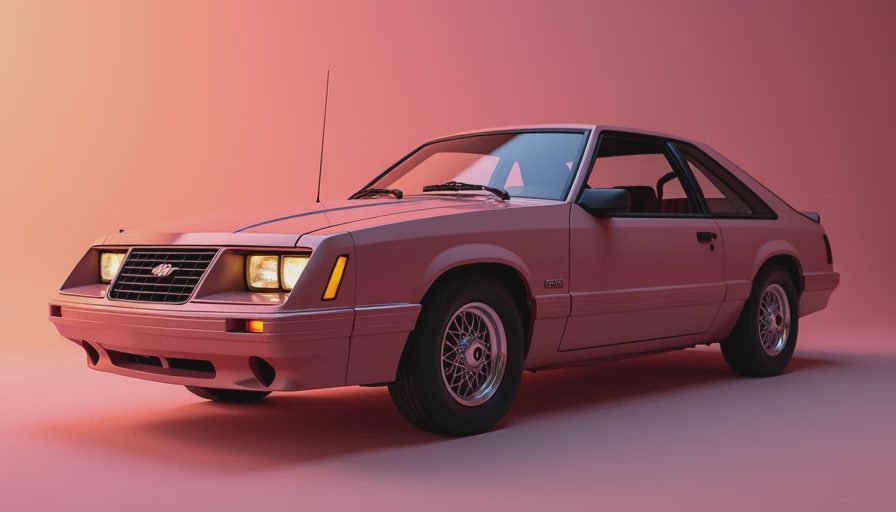
You smell it before you see it—that mix of unleaded gasoline, hot rubber, and worn carpet. Then you hear the idle: a lumpy cam, the exhaust crackling off garage walls. This is the fox body Mustang, Ford's third-generation pony car that ran from 1979 to 1993. It is not the most beautiful Mustang ever made, but it might be the most beloved by people who actually drive their cars. I have spent countless Saturday mornings at Cars and Coffee events, and the crowd around the fox body is always the most animated. Owners swap stories of high school drag races, first engines built in a parent's driveway, and that perfect notchback they let get away. The fox body Mustang is more than a car; it's a gateway into do-it-yourself performance culture.
The platform was a radical departure from the heavy Maverick-based Mustang II. Ford engineers stripped weight, using a unibody structure borrowed from the Fairmont and a redesigned suspension that finally gave the Mustang competitive handling. The 1979 cars launched with a wheezy 2.3-liter four-cylinder and a 5.0-liter V8 that barely made 140 horsepower. But by 1987, fuel injection and a hotter cam bumped the 5.0 to 225 horsepower, and the fox body Mustang became the budget performance king. A brand-new LX 5.0 notchback stickered for under $10,000 and ran 14-second quarter-miles right off the lot. That combination—light weight, cheap price, easy mods—turned the fox body into the working-class hero of American muscle.

What Makes the Fox Body Mustang So Special
The fox body's charm lies in its simplicity. The engine bay is cavernous, the suspension uses a four-link rear setup that responds well to upgrades, and the aftermarket has been building parts for thirty years. You can pull a stock 5.0 to 300 horsepower with a cam, intake, headers, and a tune. Or you can drop in a modern Coyote crate engine and have a car that handles and brakes like a new Mustang but weighs hundreds of pounds less. The fox body Mustang is a blank canvas. I know a guy in San Jose who bought a rusty 1986 coupe for $1,500, spent three years building a turbo 2.3-liter engine, and now runs autocross competitively. That kind of project is harder to do with a modern car.
The community is another part of the appeal. Online forums like SVTPerformance and Corral.net have decades of archived knowledge. Parts are cheap and plentiful. Junkyards still hold fox bodies, though the numbers are shrinking fast. The cars are sturdy enough to handle daily driving but special enough to draw a nod from fellow enthusiasts. My favorite detail: the sound of the door closing. It is a solid, heavy thunk that reminds you of a bank vault. That sound, combined with the simple dashboard and thin steering wheel, makes every drive feel like a time capsule.
The 5.0 Versus the 2.3: Which Fox Body Should You Buy?
If you want the classic experience, get the 5.0 V8. The 225-horsepower version from 1987-1993 is the sweet spot. It revs freely, responds to mods, and has that unmistakable V8 burble. The 5-speed manual Tremec transmission is notchy but direct. Avoid the automatic unless you plan to swap. The 2.3-liter four-cylinder is lighter and offers better fuel economy, but it never had the torque of the V8. The turbo SVO model (1984-1986) is a cult car: 200 horsepower, adjustable boost from the factory, and impressive handling. But SVO parts are rare and expensive. For most buyers, a stock or lightly modified 5.0 notchback or hatchback is the best entry point. The fox body Mustang is not a luxury car; it is a raw, mechanical tool that rewards the driver who wants to learn.
Prices have climbed in recent years. A clean 5.0 that needs nothing starts around $8,000. Mint, low-mileage examples can hit $20,000. You can still find project cars for under $3,000, but they often need full restoration. Rust is the enemy. Check the torque boxes, the strut towers, and the quarter-panel lips. The fox body Mustang is prone to rust in those areas. If you find a solid body, the mechanicals are easy and cheap to fix.
Modding Your Fox Body: What Works and What Doesn't
The fox body Mustang aftermarket is massive, but not every upgrade is worthwhile. Start with subframe connectors to stiffen the chassis—it makes a huge difference in handling. Then replace the aging bushings and shocks. A set of Bilstein struts and Eibach springs transforms the car. Engine upgrades: a cold-air intake, a proper tune, and a cat-back exhaust wake up the 5.0 without breaking the bank. For more power, a Ford Racing cam and a set of AFR heads will push you past 300 horsepower. Avoid cheap headers and questionable brand parts; you will end up with rattles and poor fitment. The fox body Mustang responds best to careful, incremental modifications.
Do not forget the brakes. Stock fox body brakes are inadequate for modern traffic. A Cobra or Wilwood upgrade kit is a wise investment. And upgrade the tires—today's radials are light-years ahead of the original Goodyears. A well-sorted fox body handles like a Miata but accelerates like a muscle car. That balance is rare and addictive.
Why the Fox Body Mustang Still Matters in 2025
The fox body Mustang represents the last truly analog American performance car. It has no traction control, no stability nannies, no infotainment screen. You drive it with your hands and feet and ears. As cars get heavier and more isolated, the fox body's light weight and direct feedback become more precious. Enthusiasts are rediscovering them, and values are rising. But unlike other collector cars, the fox body Mustang is still affordable enough to drive hard. You can take it to a track day, autocross, or a road trip without worrying about depreciation.
A year from now, what I will remember is not the spec sheet but the feeling: accelerating hard through an on-ramp, the engine pulling cleanly to 6,000 rpm, the steering wheel alive with information. That is the fox body Mustang experience. And it is not just nostalgia. It is a reminder that driving can be a physical, engaged activity. If you have been wondering whether to buy one, stop wondering. Find a clean 5.0, drive it, and you will understand why the cult endures.