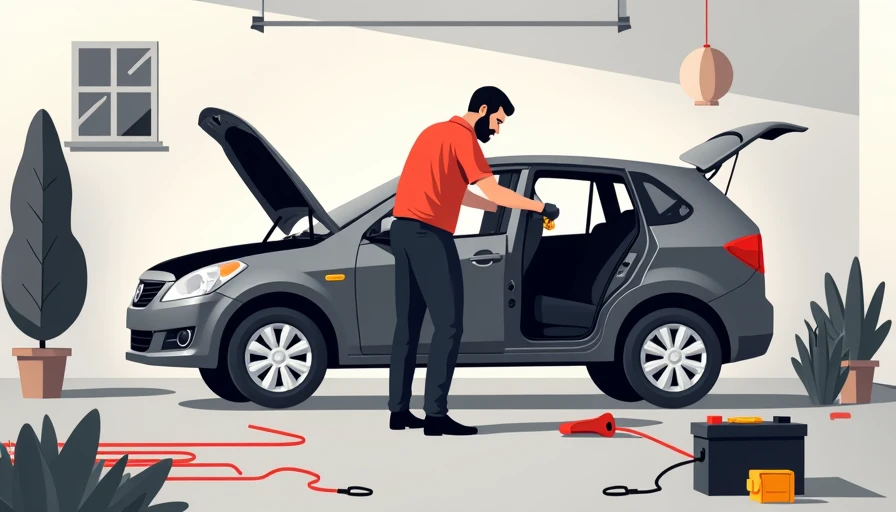
The first clue is often a tired click beneath the hood, followed by the silence of a starter that should be turning. Knowing what to do when changing a car battery can save a morning appointment, a tow bill, and the particular frustration of missing a reservation because the car will not leave the driveway. The job is manageable for many drivers, but it involves more than loosening two nuts. You need the correct battery, a safe work area, and a careful sequence for disconnecting and reconnecting power.
Know When the Battery Is the Problem
A weak battery often announces itself gradually. Interior lights look dim, the engine cranks slowly, or the clock and radio reset after startup. A battery warning light can point to a charging-system problem rather than the battery itself, so do not assume replacement is the complete answer. Corroded terminals, a loose ground cable, a failing alternator, or a parasitic electrical drain can create similar symptoms.
Before buying anything, test the battery. Many auto-parts stores will perform a basic battery and charging-system test at no charge. A healthy, fully charged battery generally measures around 12.6 volts with the engine off, while a running vehicle often shows roughly 13.7 to 14.7 volts at the terminals. Those numbers are useful clues, not a substitute for a proper diagnostic test. If the battery is more than three to five years old, replacement becomes a reasonable possibility, especially after extreme heat or a cold snap.
Read the label on the old battery and your owner's manual. Group size, terminal position, cold-cranking amps, reserve capacity, and battery chemistry all matter. A $120 conventional battery may fit an older sedan, while a start-stop vehicle can require a $180 to $350 enhanced flooded or AGM battery. The cheapest option is not a bargain if it is the wrong size or cannot support the car's electrical demands.
What to Prepare Before Changing a Car Battery
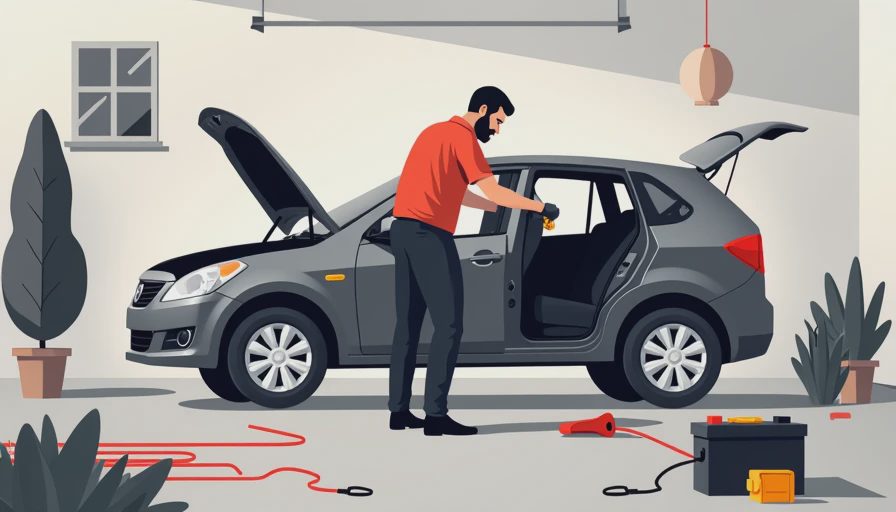
When changing a car battery, gather the tools before opening the hood. Most vehicles need a 10-millimeter or 13-millimeter wrench or socket, an extension, safety glasses, work gloves, and a small wire brush. A memory saver that plugs into the OBD-II port or a 12-volt outlet can preserve certain radio presets and settings, but use one only according to the vehicle and device instructions. Some cars require a battery-management reset after installation, and a memory saver does not replace that procedure.
Park on a level surface, set the parking brake, switch off the ignition, and remove the key from the vehicle. Keep metal jewelry away from the battery. Do not smoke or work near an open flame because batteries can release flammable hydrogen gas. If the case is cracked, swollen, leaking, or frozen, stop and call a professional. Acid can burn skin and damage paint, while a damaged battery should be handled through an appropriate recycling or service channel.
Take a quick photo of the cable layout before removing anything. Identify the positive terminal, usually marked with a plus sign and a red cover, and the negative terminal, marked with a minus sign and connected to the vehicle body. This small record is helpful when the engine bay is crowded or the replacement battery has a slightly different shape.
The Safe Removal and Installation Sequence
The central rule when changing a car battery is simple: disconnect negative first and reconnect negative last. Loosen the negative clamp, lift it from the terminal, and position it where it cannot spring back into contact. Then remove the positive cable. Undo the hold-down bracket, lift the battery straight up using its handle, and keep it level. A car battery can weigh 30 to 50 pounds, so use both hands and avoid leaning over it unnecessarily.
Clean corrosion from the tray and cable clamps with a battery brush. Do not force a clamp onto a terminal or hammer it into place. Set the new battery in the same orientation as the old one, secure the hold-down firmly, and confirm that it cannot move. Attach the positive cable first, followed by the negative cable. Tighten each clamp until it is snug, but avoid stripping the fastener or crushing the terminal. Replace protective covers before closing the hood.
This sequence reduces the chance of accidentally creating a short between the positive terminal and a grounded metal tool. If sparks appear repeatedly, the cable becomes hot, or the battery shifts in its tray, stop and investigate rather than finishing by force.
What Happens to the Car's Electronics
Modern vehicles can forget more than a clock setting when power is interrupted. The radio may request a security code, automatic windows may need recalibration, and idle quality can feel unusual while the engine computer relearns its settings. Steering-angle, seat-memory, and start-stop systems can also behave differently for a short time.
When changing a car battery, check the owner's manual for a required battery registration or battery-management reset. BMW, Mercedes-Benz, Volkswagen, Audi, and many newer Ford, Jeep, and General Motors models can have specific procedures, particularly when replacing an AGM battery or changing battery type. A shop with a compatible scan tool may charge about $50 to $150 for registration, though some vehicles complete the process automatically.
After installation, start the engine and confirm that the battery warning light turns off. Test headlights, brake lights, power windows, climate controls, and the charging voltage. Take a 15- to 20-minute drive with a mix of city and steady-speed driving, then recheck for warning messages. If the car still struggles to start, the battery might not be fully charged, or another component could be failing.
Battery Choices for Everyday Driving and Travel
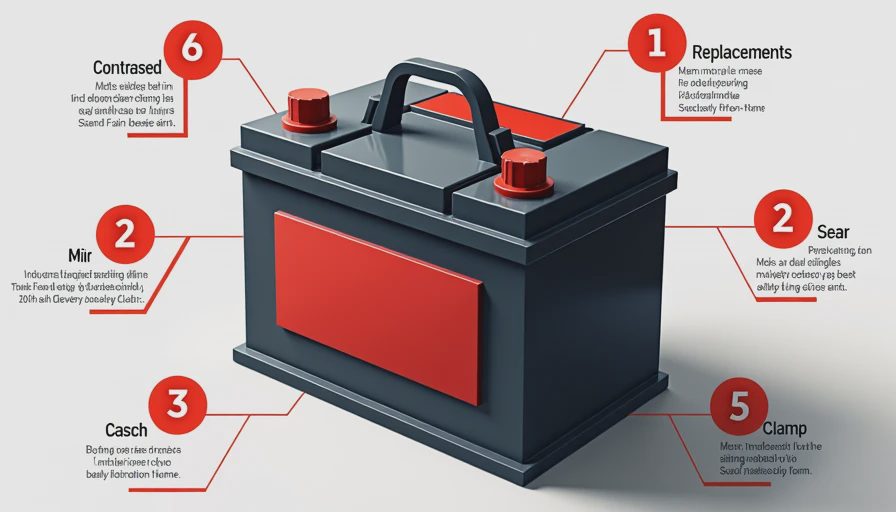
A commuter who drives a compact Honda Civic or Toyota Corolla may do well with a standard lead-acid replacement that matches the original specifications. Vehicles with heavy accessory loads, frequent short trips, heated seats, or automatic engine stop-start systems often benefit from an AGM design. AGM batteries typically cost more, but they are built for higher cycling demands and can be a better fit when the manufacturer specifies one.
For road trips, inspect the battery before leaving rather than waiting for a remote trailhead or an unfamiliar town. Look for swelling, damaged insulation, loose terminals, and powdery white or blue-green corrosion. Pack jumper cables or a charged lithium jump starter, but remember that a jump pack is an emergency tool, not a repair. If the alternator is not charging, the car can stop again after a short distance.
Some drivers also choose roadside assistance through an auto club, a credit card, or an insurance policy. Coverage details differ: one plan might include battery jump-start service, while another could offer mobile battery replacement at an additional cost. Comparing those options during renewal can be cheaper than paying a $100 or higher emergency-service bill on a Sunday morning.
When to Call a Professional
DIY installation is reasonable when the battery is accessible and the instructions are clear. Call a technician if the battery sits under a seat, inside the trunk, or beneath complex trim; if the vehicle has hybrid or high-voltage components; or if the terminals are badly corroded. Never treat a hybrid traction battery like a conventional 12-volt starter battery. The systems are different, and orange high-voltage cables should not be touched.
Professional installation often costs $20 to $100 in labor, although mobile services may bundle labor, testing, and the battery itself. That price can include battery registration, disposal of the old unit, and a charging-system check. Ask what is included before approving the work. A reputable technician should explain the battery group size, warranty length, and test results without pressuring you into unrelated repairs.
The detail that made the difference for my own long drives was adding battery testing to routine service rather than waiting for a dramatic click. When changing a car battery, take the same calm approach: verify the diagnosis, buy the correct part, follow the terminal sequence, and test the finished job. Then put the tools away, start the engine, and get back to the road with confidence.