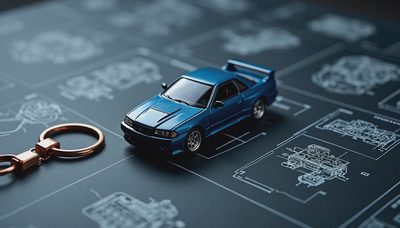
I still remember the first time I heard a Mazda RX7 start up. It was a late-summer evening in San Francisco, and a friend had just pulled his ’93 FD into the driveway. That initial bark, then the smooth, high-pitched hum as the rotary engine settled into idle — it’s a sound unlike any other piston engine. The Mazda RX7 isn’t just a car; it’s a mechanical symphony that has captivated enthusiasts for decades.
The Engine That Changed Everything
At the heart of every Mazda RX7 lies the Wankel rotary engine. Unlike conventional pistons that go up and down, the rotary uses a triangular rotor that spins within an epitrochoid housing. This design is incredibly compact, lightweight, and capable of astonishing revs — the FD’s 13B-REW twin-turbo rotary redlines at 8,000 rpm. The trade-off? Rotary engines consume oil by design and have a reputation for apex seal failures. But when they’re running right, the Mazda RX7 delivers a power delivery that’s both linear and urgent, with a soundtrack that’s part buzz saw, part Formula 1.
Generations: FC vs. FD
The Mazda RX7 spans three generations, but the two that matter most to enthusiasts are the FC (1986–1992) and the FD (1992–2002). The FC, often called the “favorite of the purists,” brought pop-up headlights and a more practical hatchback body. It’s lighter, simpler, and less expensive to maintain than its successor. The FD, on the other hand, is the icon. With its flowing, almost organic bodywork and a sequential twin-turbo system, it redefined what a Japanese sports car could be. Finding a clean Mazda RX7 FD today can cost anywhere from $25,000 to $60,000 depending on condition and modifications.
Behind the Wheel
Sliding into the driver’s seat of an FD, you immediately notice the low hip point and the perfectly weighted steering. The shifter falls to hand with a short, precise throw. Acceleration is not about brutal torque — the rotary loves to be wound out. You keep the tachometer above 4,000 rpm, and the car responds with a surge that builds all the way to redline. The Mazda RX7 handles like a slot car; its 50/50 weight distribution and four-wheel independent suspension make it a joy on winding coastal roads. I’ve driven many sports cars, but few feel as connected as this one.
Ownership Realities
Let’s be honest: owning a Mazda RX7 requires patience and a willingness to learn. Rotary engines need frequent oil changes, regular spark plug replacements, and careful warm-up routines. The twin-turbo system on the FD is prone to vacuum leaks and boost control issues. Many owners swap to single-turbo setups for reliability. Fuel economy is poor — expect around 18 mpg on a good day. But for those who love the car, these quirks become part of the ritual. There’s a strong community online, with forums and specialist shops like Rotary Performance and Racing Beat keeping the Mazda RX7 alive.
The Mazda RX7 in 2025
Two decades after the last RX7 rolled off the line, demand is higher than ever. Values have climbed steadily, and clean, unmodified examples are becoming collector items. Mazda has teased rotary returns (the MX-30 R-EV uses a rotary range extender), but no new RX-7 is on the horizon. That makes the existing Mazda RX7 a unique piece of automotive history. If you’re considering buying one, budget for a thorough pre-purchase inspection by a rotary specialist, and set aside at least $2,000-$5,000 for immediate maintenance.
Buying Guide: What to Look For
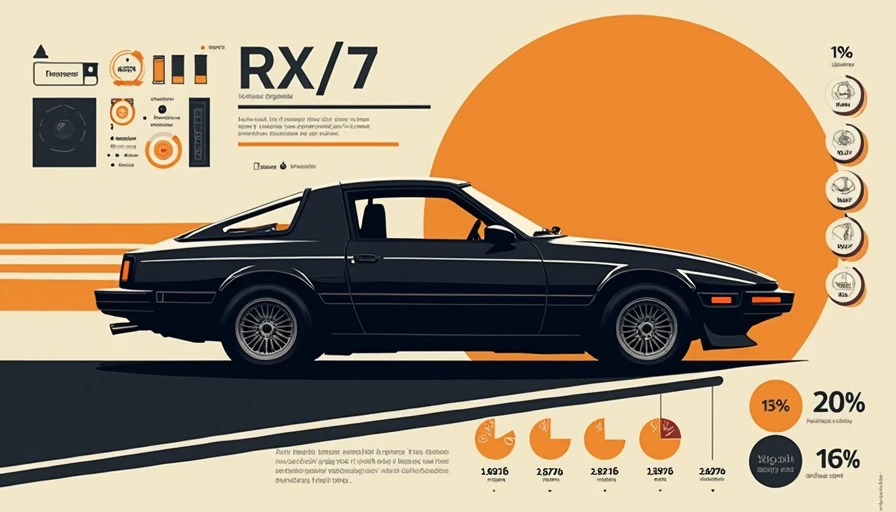
Before you commit to an RX7, a thorough inspection is a must. Start with a compression test — rotary engines should have at least 100 psi across all faces with less than 10% variation. Low compression means apex seal wear, which can cost $3,000–$5,000 to rebuild. Check for coolant seal failure: white smoke from exhaust or milky oil are red flags. Inspect the body for rust, especially under the rear bumper and wheel wells. On FD models, examine the twin-turbo system for cracked vacuum lines — a common issue. Many owners convert to a single turbo for reliability; ask if that’s been done. Verify the maintenance history: rotary engines need oil changes every 3,000 miles and spark plugs every 10,000. A well-maintained example might still have its original engine; a neglected one will need major work. Budget at least $2,000 for immediate maintenance after purchase. The 1993-1995 FD models are particularly desirable but have complex vacuum systems; later 1996+ models have OBD-II but added weight. Prices for clean FDs range from $30,000 to $60,000; FCs can be found for $10,000–$20,000. Join forums like RX7Club to find local specialists. With due diligence, you can find a Mazda RX7 that brings years of joy.
Why It Still Matters
The Mazda RX7 is more than a nostalgia piece. It represents a time when Japanese manufacturers took risks — building a mass-produced sports car with an engine that defied convention. Driving one today reminds you that cars can be passionate and imperfect. The smell of burning oil at a stoplight, the way the rotary sings at 7,000 rpm, the knowing nod from another owner — these are the details that linger. A year from now, what I’ll remember isn’t the specs or the numbers, but that first start-up, the sound that made me grin, and the feeling that I was part of something special.
If you ever get the chance to own or drive a Mazda RX7, take it. You won’t forget it.