
The low hum of a six-cylinder under load has a particular way of clarifying the mind. Last month, running a tired but willing project wagon north out of Denver toward the Canadian border for a long-weekend loop, I kept thinking about how many of the cars sharing the highway with me had crossed that same imaginary line in pieces or fully assembled. Engines from one side, transmissions from the other, stampings, wiring harnesses, final assembly—North American cars have been collaborative productions for decades. That integration is now staring down a hard deadline.
President Trump has threatened to raise U.S. tariffs on all cars, trucks, automotive parts, and steel from Canada to 50 percent effective January 1, 2027. The announcement came in late August 2026 after trade negotiations collapsed, escalating an already tense dispute. Current Section 232 tariffs sit at 25 percent on vehicles (with effective rates often lower depending on U.S. content for CUSMA/USMCA-qualifying models). Doubling that headline rate—and extending meaningful pressure to parts—would represent a sharp break from the status quo that has governed the industry.
As of early November 2026, sources indicate the two governments are talking again about easing steel and auto tariffs, but progress appears limited and the clock is loud. Industry voices have stopped using soft language. Honda executives and others have called a January doubling potentially catastrophic. Roughly a million vehicles a year flow from Canada into the U.S. market. Canada accounts for about 9 percent of new vehicles Americans buy. The reverse flow matters too: hundreds of thousands of U.S.-built vehicles head north annually.
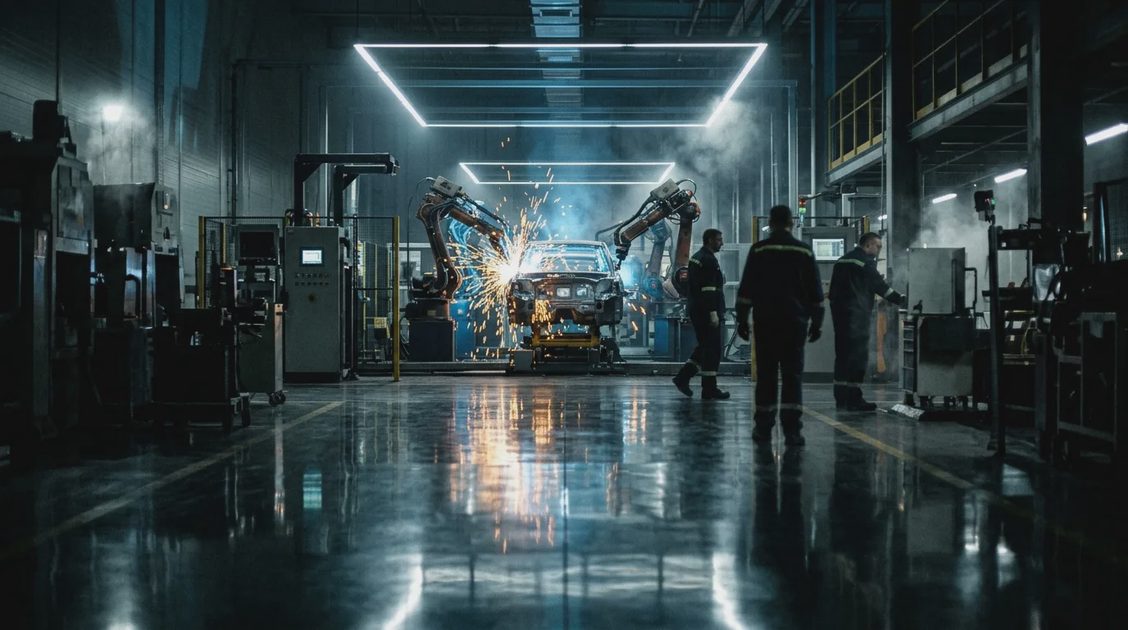
The Tariff Cliff Approaching January 2027
How We Got Here
The current friction did not appear overnight. Section 232 national-security tariffs on steel, aluminum, and later autos have layered complexity onto the USMCA framework since 2025. Canada responded with its own countermeasures on U.S. vehicles and other goods. A potential deal that would have lowered the top-line Canadian car and light-truck tariff toward 15 percent and eased metal duties fell apart in August over issues that included treatment of medium- and heavy-duty trucks. Trump’s subsequent social-media announcement set the 50 percent target for the new year and framed it as a response to Canadian practices.
By late October, Reuters reported that U.S. and Canadian sources said negotiators were again working on relief for Section 232 steel and auto duties, with some Canadian voices hoping for movement before the U.S. midterms. U.S. sources emphasized a desire for further Canadian concessions. As of the most recent public signals, no agreement has removed the January threat. The four-month window from the August announcement has functioned as both pressure and negotiating space.
What a 50% Hit Really Means for the Industry
Mechanics matter more than the headline number. Under the current 25 percent regime, many vehicles already face an effective rate closer to 10 percent or lower because of U.S.-content carve-outs. Moving to a full 50 percent changes the arithmetic in kind, not just degree. A model with significant non-U.S. content suddenly carries a much heavier duty load. Parts that had enjoyed relative protection under CUSMA rules would face new exposure if the threat is applied broadly.
Automaker sources speaking anonymously to outlets like The Detroit News have described scenarios ranging from severe price pressure to outright inability to import certain Canada-built models at volume without major disruptions to pricing, supplier contracts, and dealer networks. Assembly plants on both sides of the border are not isolated factories; they are nodes in a continuous flow of components. A sudden doubling raises the cost of that flow for everyone downstream—including U.S. assembly operations that rely on Canadian parts.
Honda’s public comments in late October captured the industry tone: the increase would be devastating and would test the three-country production model that has defined the region for decades. Other manufacturers have echoed the concern in private briefings. The risk is not only higher sticker prices. It is the potential for production shifts, delayed model launches, and reduced model availability in both markets.
Ripples Across the Assembly Line and the Open Road
Supply Chain Reality Check
Stand in a Canadian plant that builds popular SUVs or pickups for the U.S. market and the interdependence is physical. Stampings, engines, electronics, and interiors move back and forth. A tariff shock of this magnitude does not stay neatly on one side of the border. U.S. exporters of vehicles and parts into Canada already face Canadian counter-tariffs; further escalation risks reciprocal damage. Canada has already matched certain U.S. measures with its own surtaxes and support packages for affected sectors.
For road-trippers and enthusiasts the effects are more diffuse but still real. Higher production costs tend to surface as higher transaction prices, tighter inventory of certain configurations, or slower refreshes of popular nameplates. The vehicles many of us actually drive—practical performance wagons, capable trucks, efficient crossovers—often carry significant cross-border content even when the final assembly badge says otherwise. Insurance, residual values, and the used market would eventually feel secondary waves.
There is also a quieter cultural cost. The open road between Denver and the Canadian Rockies, or the Great Lakes corridor, has always felt continuous. Border formalities exist, but the cars themselves have treated the line as administrative rather than industrial. A sustained high-tariff environment risks turning that seamless production geography into something more fragmented and expensive.

Consumer and Dealer Impacts
Dealers on both sides already navigate inventory that reflects integrated sourcing. A 50 percent duty layered onto existing costs would force hard choices about which models remain competitive. Analysts have previously estimated that earlier tariff rounds added thousands of dollars to vehicle prices in some scenarios; a further step-up compounds that pressure at a moment when affordability is already a central consumer concern.
Retaliatory measures cut both ways. Canadian buyers have reduced purchases of certain U.S.-built vehicles in response to earlier duties. Prolonged friction risks shrinking the total addressable market for manufacturers who have treated North America as a single production and sales theater. The result is less choice, higher average transaction prices, and potential consolidation of model lines toward the most volume-efficient configurations.
My Take: Why This Feels Like a Forced Rewrite of the North American Script
I am not a trade lawyer, and I do not pretend the politics are simple. National-security justifications, rules-of-origin disputes, dairy and softwood side issues, and political calendars all collide here. What I am is a driver and a writer who has spent enough nights in roadside motels and enough days in factory parking lots to understand that the modern automobile is a collaborative object. The best ones often carry DNA from more than one country.
From a practical standpoint, a January 50 percent jump would be an expensive way to prove a point. The industry has already adapted once to the 25 percent baseline. Asking it to absorb a doubling with less than two months of remaining runway creates avoidable uncertainty for workers, suppliers, dealers, and buyers. The ongoing talks reported in late October are the rational path; the alternative looks like mutual pain with limited strategic upside once the short-term political theater ends.
There is also a longer view worth holding. North American vehicle production has been one of the more successful examples of regional industrial integration. The USMCA was designed, imperfectly, to lock in and update that reality. Using tariff threats as primary negotiating leverage risks eroding the very efficiency that made the region competitive against other global production centers. If the goal is more domestic content and investment, clearer multi-year rules and targeted incentives usually outperform sudden rate shocks that raise costs across the board.
On a personal level, I still plan to keep driving north when the mountains call. The project wagon will still cross the border when the schedule allows. What I hope does not change is the underlying assumption that a car assembled in Ontario or Michigan can move freely enough to remain a practical object rather than a political statement. The horizon looks better when the logistics behind it are predictable.
Whether the January deadline holds, gets delayed, or is defused by a narrower deal remains to be seen. The industry is watching closely, and so are the people who simply want reliable, interesting vehicles at prices that do not feel like punishment for living in an integrated continent. The engines will keep turning either way. The question is how much friction we decide to build into the system that keeps them supplied.